Luxury Boutique Hotels America: A Strategic Guide to High-End Independent Hospitality
The modern American hospitality landscape is defined by an ongoing tension between the scale-driven efficiency of global chains and the granular, highly curated experience offered by boutique properties. In the twenty-first century, the concept of a “boutique” experience has moved beyond its origins as a counter-cultural rejection of the “cookie-cutter” hotel. It has matured into a sophisticated, professionalized tier of the industry that caters to a demographic demanding agency, aesthetic resonance, and high-touch service. This shift reflects a broader societal movement toward personalization, a transition where the traveler no longer seeks a uniform standard of accommodation, but rather a “sense of place” that mirrors their own values and aesthetic sensibilities.
However, the institutionalization of this sector has introduced significant confusion. The term “boutique” is frequently applied as a marketing veneer to properties that lack the operational core of a true boutique establishment. A property may possess eclectic decor or a trendy lobby bar, but without the underlying service architecture, personalized guest engagement, and a genuine connection to the local cultural ecosystem, it remains merely a stylized version of a standard commercial hotel. Navigating this sector effectively requires a transition from the aesthetic-focused approach of traditional travel media toward a structural, analytical evaluation of property management, service delivery, and operational philosophy.
This article serves as a forensic examination of the high-end, independent hospitality sector within the United States. It deconstructs the mechanisms that define these properties, moving past the surface-level allure of design portfolios to analyze the logistical realities that sustain them. By providing a conceptual framework for evaluation, this resource aims to empower the discerning traveler to distinguish between superficial styling and the authentic, high-value experiences that characterize the true boutique movement.
Understanding “luxury boutique hotels in America.”
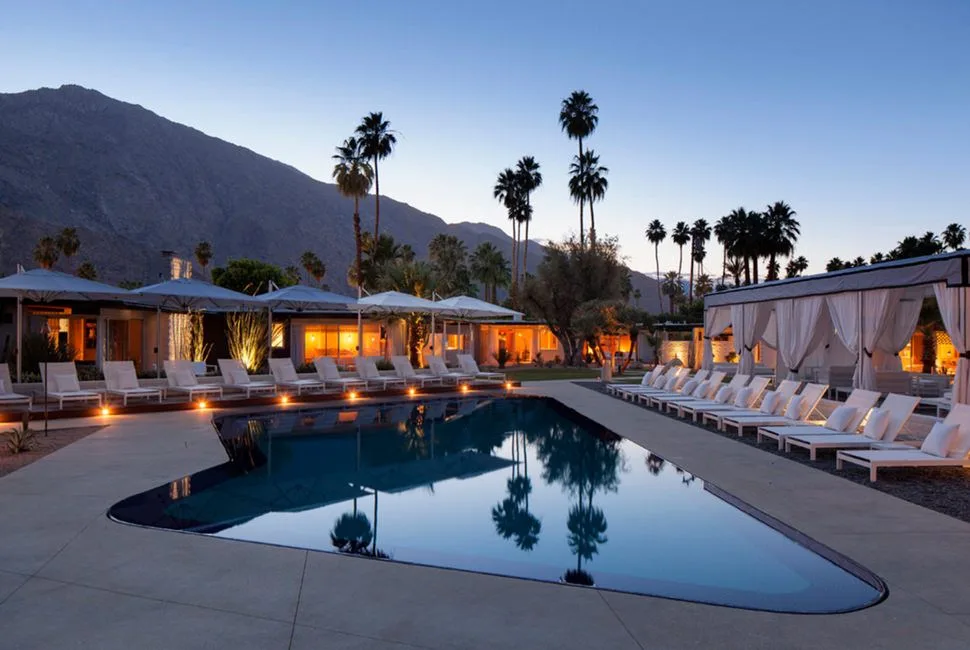
The search for luxury boutique hotels in American destinations is often obstructed by the ambiguity of the industry’s defining terminology. Because there is no standardized, regulatory definition of a “boutique” property, a marketing director may legally label any hotel with fewer than 100 rooms—regardless of its service model under that umbrella. This creates a high risk for the sophisticated traveler: the misalignment of expectation and delivery. True luxury in this space is defined not by the novelty of the design, but by the “Service-to-Guest” ratio, the depth of the local integration, and the autonomy of the property’s management.
A common misunderstanding is the conflation of “unique design” with “luxury.” While a quirky aesthetic can provide a momentary visual delight, the luxury experience is dictated by the unseen systems: the quality of the bedding and sanitation, the reliability of localized concierge intelligence, and the seamlessness of the guest-staff interaction. The category of luxury boutique hotels in America represents a complex, limited-capacity ecosystem where the intimacy of the environment must be balanced against the rigorous demands of professional hospitality.
Oversimplification in this sector is a persistent threat. Many travelers assume that because a property is small and “independent,” it should naturally be more authentic or service-oriented than a traditional luxury chain. This ignores the exorbitant operational expenses associated with boutique management—the cost of curating unique programming, the difficulty of maintaining consistent service quality without the standardized training manuals of global corporations, and the logistics of sourcing artisanal amenities. Treating these properties as standard lodging is a fundamental failure of perspective; they are, in fact, highly engineered, fragile, and deliberate human-centric environments.
Deep Contextual Background: The Evolution of Boutique Hospitality
The boutique movement originated in the 1980s, primarily in urban centers like New York and London, as a direct challenge to the “impersonal and megalithic” nature of corporate hotel chains. Pioneers sought to treat the hotel as an extension of the guest’s own residence, with a focus on art, social atmosphere, and personalized attention. Over the last four decades, the movement has undergone a transition from “counter-culture” to “high-culture,” attracting institutional capital and sophisticated design firms. This institutionalization has brought both stability and the risk of homogenizing the very “idiosyncratic” nature that birthed the movement.
Conceptual Frameworks and Mental Models
-
The Scale-Intimacy Paradox: Luxury in hospitality is often inversely proportional to scale. As the number of rooms increases, the ability of staff to provide a bespoke, name-recognition experience decreases exponentially.
-
The “Sense of Place” Metric: A property’s success is measured by how well it acts as a filter for its local environment. Does it source from local artisans? Is the architecture reflective of the vernacular? If the hotel could be transported to another state without losing its identity, it would not be a “true” boutique property.
-
The Infrastructure-Experience Balance: A property must balance high-performance backend systems (climate control, water pressure, internet stability) with a high-touch, human-centric frontend. Failure in either destroys the luxury claim.
-
The Agility-Standardization Frontier: How does the property balance the need for high-level service standards with the need to remain agile and personal? The best properties use standard protocols as a hidden floor, while the visible service remains highly adaptive.
Categorizing Operational and Experiential Models
| Category | Typical Structure | Primary Luxury Metric |
| Architectural Retreat | Restored/Historic | Design-led / Permanent |
| Expeditionary Boutique | Remote/Nature-adjacent | Service-led / Mobile-modular |
| Urban Sanctuary | Adaptive Reuse | Location/Connectivity-led |
| Thematic/Niche Boutique | Concept-driven | Programming-led |
Choosing between these requires an assessment of your personal threshold for “institutional” vs. “artisan” hospitality. Architectural retreats offer deep, static immersion, whereas urban sanctuaries prioritize seamless integration into the high-energy flow of a city.
Detailed Real-World Operational Scenarios
-
The “Utility-Spine” Reliability Failure: Many boutique properties occupy historic buildings. A property that lacks redundant power or modern HVAC systems risks total system collapse during minor climate fluctuations—a major failure in the luxury sector.
-
The Privacy-Density Conflict: Sites that over-optimize for volume often cram public-facing programming (like rooftop bars) into space that should be reserved for guest tranquility. The failure mode here is the intrusion of non-guests into the luxury experience.
-
The Topographical/Historical Mismatch: Adaptive reuse is a cornerstone of boutique hospitality, but it often creates accessibility challenges. An evaluation of the “Arrival Logistics” is essential; if the property makes the entry of a guest difficult, it has failed its primary duty of care.
Planning, Cost, and Resource Dynamics
| Resource Type | Sustainability/Reliability Impact | Financial Complexity |
| Building Maintenance | High (Regulatory/Structural) | Very High |
| Labor/Staffing | High (Experience Quality) | Moderate |
| Experience Programming | Low (Experience Quality) | Variable |
The cost of staying at the top-tier luxury boutique hotels in America’s destinations is largely a reflection of these substantial development and operational costs. Guests should expect premium pricing not as a brand-prestige premium, but as a pass-through of the cost of maintaining a low-density, high-service environment in a challenging, real-world context.
Tactical Strategies and Support Systems
-
The Site Mapping Analysis: Before booking, examine the floor plan. Note the distance between public spaces (bars, lobbies) and private rooms. If the lobby is the primary thoroughfare, sound insulation is your most critical check.
-
The “Concierge-Intelligence” Audit: For truly elite properties, a quick, specific email query to the concierge about a local nuance (e.g., “Is the local artisan market open on Tuesday?”) will immediately clarify the level of operational sophistication.
-
The Weather-Resilience Audit: Always check if the property has updated its HVAC system. In the American landscape, seasonal extremes are the primary source of guest dissatisfaction in historic properties.
-
The Digital-Human Interface Check: Do they allow for mobile-key and automated systems, or is the service purely human-directed? Luxury boutiques should offer both, prioritizing human connection for high-value interactions.
The Risk Landscape: Failure Modes
-
The Seasonal/Capital Collapse: Many boutique properties operate on thin margins. A resort that hasn’t invested in a multi-year capital expenditure (CapEx) plan for renovations risks falling into a “decay trap” where the decor remains trendy, but the systems (plumbing, wiring) are obsolete.
-
The Permitting Fragility: Some independent boutiques operate in regulatory grey zones. A risk exists that a location could be shuttered or forced to reduce amenities due to local zoning changes.
-
The Wildlife/Neighborhood Interface: Inadequate waste management in urban-density environments leads to pest issues. A luxury site must have high-grade, professional-grade sanitation infrastructure that is invisible to the guest.
Governance, Maintenance, and Long-Term Adaptation
-
The Maintenance Cadence: High-end boutique sites require constant upkeep of finishes. Look for properties that disclose their renovation or inspection cycles in their annual reports or “about” pages.
-
Adaptive Management: A sophisticated operator will adjust their service model based on seasonal demand data. Properties that successfully manage the “off-season” without sacrificing service quality demonstrate a higher level of operational maturity.
-
Layered Checklist: For future bookings, verify: 1. Building renovation year, 2. HVAC system status, 3. Guest-to-staff ratio, 4. Sound-isolation ratings (if available).
Measurement, Tracking, and Evaluation
-
Leading Indicator: The quality of the digital booking experience. An operator who invests in a high-fidelity website and transparent unit mapping usually invests in the operational side of the property.
-
Qualitative Signal: Ignore the “visual-only” reviews on social platforms; look for reviews mentioning infrastructure reliability (internet speed, water pressure, sleep quality).
-
Quantitative Signal: The “Service-to-Guest” ratio. Premium, true-boutique sites usually maintain a dedicated staff presence 24/7, even at small scales.
-
Documentation Example: The “Infrastructure Continuity Log.” A simple mental note or inquiry about emergency protocols during the booking process clarifies the professional standing of the management.
Common Misconceptions and Oversimplifications
-
“Small is always better”: Size is merely a scale; the quality of the service and the management of the building are what determine the luxury value.
-
“It’s just a house/historic building”: At the luxury level, these are high-performance engineering feats that require significant ongoing investment.
-
“Trendy decor is enough”: Without professional-grade maintenance and high-performance systems, decor is merely a distraction from operational shortcomings.
-
“Any independent hotel is a boutique hotel”: Boutique hospitality is a specific management philosophy that prioritizes personalized engagement; many independent hotels are simply small, unbranded commercial properties.
Ethical and Contextual Considerations
The expansion of these properties into sensitive urban or rural areas requires a conversation about community impact. Ethical travelers should favor operators who employ “low-impact” management strategies and who participate in local community development. Your patronage of these sites is a signal to the industry regarding the standards of ecological and structural performance you expect from the luxury boutique hotels america market.
Conclusion
The pursuit of the luxury boutique hotels America market is an exercise in discerning the intersection of engineering and environment. It requires the traveler to set aside the generic appeal of “outdoorsy” or “hip” marketing and engage with the property as a specialized resort. By prioritizing operators who demonstrate a mastery of site infrastructure, privacy architecture, and service-level reliability, one can ensure that the experience is one of deep immersion rather than superficial novelty. In the final analysis, the most successful of these destinations are those that offer a sophisticated, managed, and profoundly human dialogue with the local environment.