Best Surf Camp Spots in the United States: An Analytical Guide for the Discerning Learner
The pursuit of proficiency in surfing, a pursuit as much about environmental intuition as it is about physical dexterity, requires more than access to a coastline. It demands a structured engagement with the maritime ecosystem, an appreciation for the mechanics of wave formation, and, frequently, the expert guidance of a dedicated coach. The modern surf camp has moved far beyond the rudimentary “board-and-beach” model of the late twentieth century, evolving into a sophisticated educational infrastructure designed to compress the typically protracted learning curve of the sport.
For the contemporary enthusiast, selecting an environment that aligns with one’s current technical stage and long-term goals is an exercise in critical research. The market for instructional surf programs in the United States is vast and heterogeneous, spanning from the historic breaks of the North Shore of Oahu to the localized, high-performance coaching hubs of Southern California and the emerging, community-focused beach schools of the Atlantic seaboard. The challenge for the student is to look past the aesthetic allure of promotional imagery to evaluate the underlying operational standards, safety certifications, and pedagogical methodologies that define a truly high-caliber program.
This analysis provides a rigorous, architectural framework for evaluating and selecting a program suited to one’s specific needs. By deconstructing the operational components of these schools, ranging from coaching ratios to the sustainability of their business practices, this guide serves as a reference for those who view surfing not merely as a recreational activity but as a discipline requiring focused, systematic instruction.
Understanding “best surf camp spots united states.”
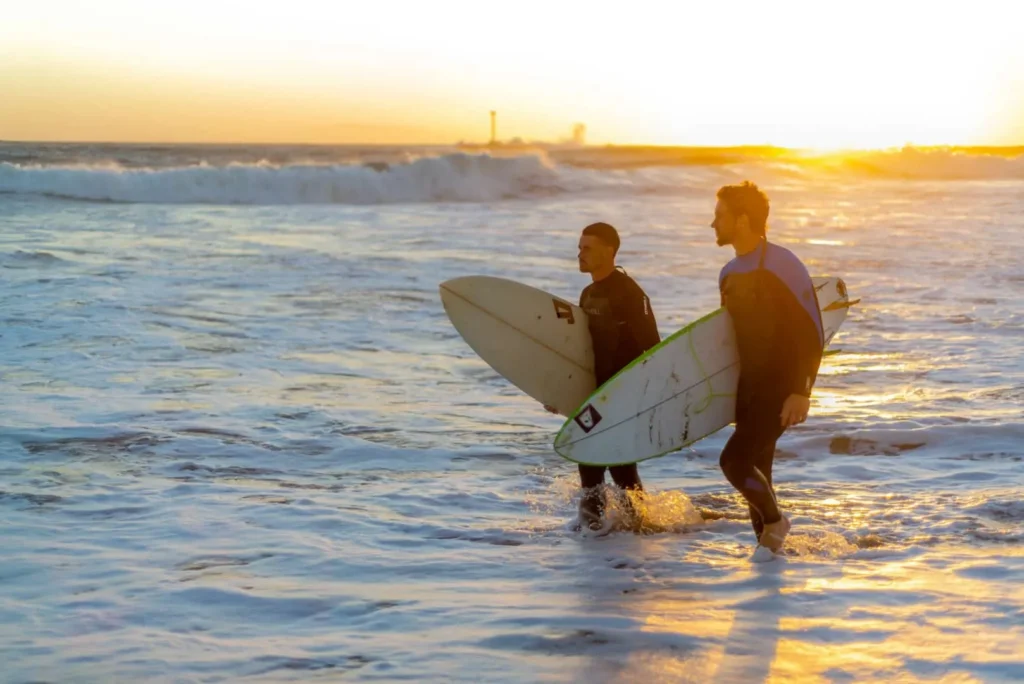
The search for the best surf camp spots united states destinations is frequently hindered by a “discovery trap” within digital media. Many outlets prioritize popularity, visual appeal, or broad accessibility, failing to account for the actual quality of the educational experience or the technical rigor of the instruction. A surf school may occupy a prime stretch of beach, but if the program is essentially a “volume-based” retail operation, the student’s ability to progress is limited. True excellence in this sector is defined by the quality of the coaching-to-student ratio, the depth of the curriculum, and the instructors’ ability to translate complex fluid dynamics into actionable physical cues.
Oversimplification poses a significant risk to the traveler. Labeling a regional surf zone as the “best” ignores the reality that surfing is a deeply localized sport; a beach that is ideal for a first-time beginner in July may be fundamentally unsafe or physically inaccessible during a winter swell. When evaluating the best surf camp spots united states offerings, one must move past the “top 10” mentality and instead analyze the operational fit of the school to the student’s specific technical requirements. Are they providing basic safety and balance, or are they providing advanced video-analysis feedback and tactical wave-reading instruction?
Deep Contextual Background: The Evolution of Surf Education
The narrative of American surf instruction is not a linear progression from casual beach culture to the present; it is a series of fits, starts, and regional experiments. From the earliest “beach boy” instructors in Waikiki to the modern, certified surf academies, the industry has been defined by a tension between the informal, laid-back ethos of surfing and the professional requirements of liability and safety. Today, the most prestigious programs are those that have synthesized this history into a coherent “school style,” blending traditional waterman ethics with modern, data-driven coaching techniques.
Conceptual Frameworks and Mental Models
-
The Educational Density Metric: Measure the program by the ratio of “individualized coaching time” to “group instruction time.” A high-value experience provides specific feedback during every session.
-
The Access-Intimacy Paradox: As access to exclusive or uncrowded breaks increases, the group size must decrease to maintain the safety and “intimacy” of the learning environment. If an “exclusive” surf camp is held in a lineup with 40 other people, the exclusivity is a marketing fabrication.
-
The Terroir-Technique Audit: During the camp, evaluate the surf through the lens of both its environment (the specific break’s tide/wind/swell sensitivity) and the instructor’s technical intervention. A camp is successful if it teaches you how to read the ocean rather than just when to stand up.
Categorizing Operational and Experiential Models
| Category | Primary Focus | Suitability |
| Introductory/Foundational | Safety, Balance, Basics | Absolute Beginners |
| Skill-Refinement/Intermediate | Technique, Wave-Reading | Advancing Surfers |
| High-Performance/Private | Video-Analysis, Tactical | Advanced/Competitive |
| Lifestyle/Immersion | Culture, Yoga, Community | Social-Centric |
Aligning your interest with these models allows you to avoid the mismatch of, for example, attending a high-level technical video-coaching seminar when you were actually seeking a foundational, confidence-building experience.
Detailed Real-World Operational Scenarios
-
The High-Volume Bottleneck: A popular surf school in a peak tourist region. Failure mode: The experience becomes a “conveyor belt” of instructors pushing students onto waves without teaching them independent paddling or safety. Mitigation: Booking “private” or “advanced-level” appointments that require separate reservations.
-
The “Hidden Gem” Logistics Trap: Selecting a boutique school that lacks the infrastructure for equipment maintenance. Second-order effect: A week spent using poorly maintained, high-drag equipment rather than performance-oriented boards.
-
The Seasonal Mismatch: Attempting a beginner-level camp at an advanced break during the winter months. The conditions will be inherently unsafe. Decision point: Plan surf camps for seasons where the specific break’s power profile is consistent with your current ability.
Planning, Cost, and Resource Dynamics
| Resource Type | Investment Priority | Variability |
| Instructor Accreditation | High (Critical for Safety) | Very High |
| Equipment Quality | High (Learning Multiplier) | Moderate |
| Ancillary Logistics | Moderate (Comfort Multiplier) | Low |
Successful planning requires a budget based not on the price of the lesson, but on the opportunity cost of the student-to-instructor ratio. The best surf camp spots united states operators often charge a premium for private or small-group experiences because they are essentially hiring a professional to dedicate their full focus to your progression.
Tactical Strategies and Support Systems
-
The “Concierge-Referral” Audit: Before finalizing a route, contact the local marine-safety or lifeguard bureau. They often know which schools have the highest reputations for safety and environmental compliance.
-
The Off-Season Hedge: Travel in the shoulder seasons (e.g., late spring or early autumn) to gain the atmospheric benefits and accessibility of the surf zone without the logistical friction of peak summer crowds.
-
The “One-Region” Strategy: Instead of attempting to visit multiple disparate surf zones, select a single stretch of coast and commit to a week of concentrated, progressive learning in that specific environment.
-
The “Advanced Query” Method: When inquiring about a camp, ask about their safety certification (e.g., ISA, NSSIA) and their specific policy on “crowd management” in the lineup. The quality and depth of the response are leading indicators of the camp’s professional rigor.
The Risk Landscape: Failure Modes
-
The Expectation-Reality Gap: Expecting a “pro-level” coach only to find a rotating staff of seasonal student-counselors. Always clarify exactly who is leading the experience.
-
The Transit-Time Cascade: Attempting to visit too many different surf locations in one week. The “transit to water-time” ratio is the primary killer of high-quality surf training.
-
The “Permit-Blind” Failure: Booking a school that lacks the proper local permits. These operations often bypass safety inspections and lack insurance coverage. Verify the “legally permitted” status of any school before committing funds.
Governance, Maintenance, and Long-Term Adaptation
-
The Post-Camp Debrief: Document the techniques learned and the specific equipment (board volume, shape) that worked best for you. A personal “surf log” is an invaluable asset for future travel planning.
-
Reviewing the “Feedback Loop”: If an experience was substandard, share the specifics (not the emotion) with the school management. Many high-quality academies rely on this feedback to refine their curriculum.
-
The Layered Checklist: Before any surf visit, confirm: 1. Is the instructor certified? 2. Is the group size capped at a safe ratio (e.g., 1:5 or lower)? 3. Does the camp provide updated, well-maintained equipment suitable for your level?
Measurement, Tracking, and Evaluation
-
Leading Indicator: The speed and specificity of the booking confirmation process. Professionalism in the initial communication usually correlates with the quality of the on-site execution.
-
Qualitative Signal: The “Ask-Back” ratio. A high-quality instructor will ask questions about your water confidence, previous experiences, and physical conditioning within the first ten minutes of the session.
-
Quantitative Signal: The “Wave-Count-to-Waiting ratio.” A high-quality camp maximizes your active time on the water by choosing breaks that suit your ability level.
-
Documentation Example: The “Progression Log”—a simple document where you record the board specs, the conditions (tide/swell), and the specific maneuvers or skills you worked on during the camp.
Deconstructing Misconceptions
-
“Surf schools are for kids”: Many of the most successful academies are specifically designed for adult learners looking to bypass the frustrating, multi-year “trial and error” phase of self-teaching.
-
“Surf camps are just for parties”: High-performance camps are rigorous, physically demanding, and focus on health, conditioning, and ocean safety.
-
“Higher price equals better experience”: Price is often a proxy for the exclusivity of the accommodations, not necessarily the quality of the coaching.
-
“You must learn in tropical water”: While comfortable, learning in varied environments (including temperate waters) provides a much more robust education in board control and environmental awareness.
Ethical and Contextual Considerations
The growth of surf tourism places significant pressure on coastal ecosystems. Ethical students should support schools that employ local staff, maintain rigorous beach-cleanup standards, and advocate for ocean conservation. Your choice of surf camp is a vote for the environmental and social philosophy you wish to see succeed in the American coastal landscape.
Conclusion
The pursuit of the best surf camp spots united states options is an exercise in discerning the intersection of physical craft and environmental intelligence. It requires the student to set aside the “vacationer” mentality and approach the experience as a specialized educational project. By prioritizing academies that offer small-group, certified instruction and by planning for “slow tourism” deep dives into singular regions rather than superficial rushes across multiple coastlines, the learner ensures that their experience is characterized by genuine technical progression. The most memorable surf camps are those where the instructor’s guidance fades into the background, leaving the student with the autonomy and knowledge to navigate the ocean with confidence, respect, and a lifetime of skill.