Best Winery Tours United States: An Analytical Guide for the Discerning Traveler
The geography of American viticulture is as expansive as it is varied, extending far beyond the archetypal imagery of Northern California’s valleys. From the historical foundations in the Hudson River Valley to the emerging viticultural zones of the Pacific Northwest and the Appalachian foothills, the United States offers a complex, multi-layered wine landscape. For the visitor, the challenge lies in discerning the signal from the noise; the modern wine tourism sector has become highly professionalized, and with that professionalization comes a saturation of marketing-first experiences that often prioritize aesthetic volume over genuine viticultural insight.
To engage with the American wine scene at a high level, one must move past the concept of the “tasting room” as a retail venue and instead approach it as an educational, sensory, and historical laboratory. A successful wine tour is not defined by the number of glasses poured, but by the extent to which the experience illuminates the relationship between terroir, technique, and producer philosophy. When the visitor understands the “why” behind the bottle, the environmental constraints of the vineyard, the specific fermentation decisions made by the winemaker, and the legacy of the estate, the value of the experience compounds.
Understanding “best winery tours in the United States.”
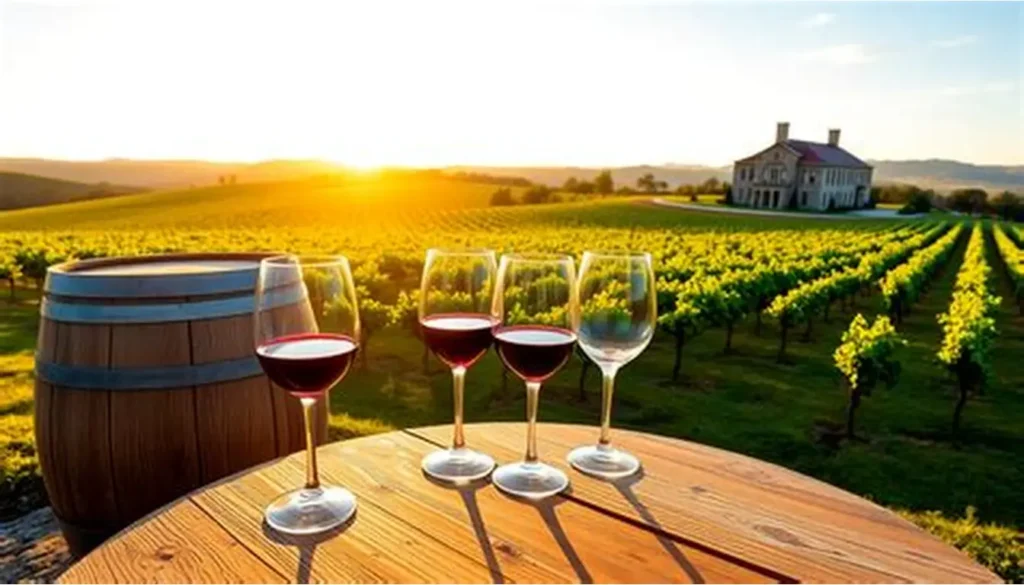
The search for the best winery tours united states destinations is frequently hindered by a “discovery trap” within digital media. Many outlets default to lists based on popularity or visual appeal, failing to account for the actual quality of the educational experience or the depth of the viticultural story. A winery may be globally famous for its architecture, but if the tour itself is a rote script delivered in a crowded, noisy environment, the actual value of the visit is minimal. True excellence in this sector is defined by the degree of “insider access” provided the ability to move behind the curtain of the production facility or to engage in a dialogue that goes beyond standard marketing narratives.
Oversimplification poses a significant risk to the traveler. Labeling a regional tour as “the best” ignores the reality that wine preferences are deeply personal and that different regions are optimized for different experiential goals. For instance, a tour designed for high-density social engagement in a tourist hub will be fundamentally unsatisfying for a visitor seeking the quiet, technical introspection of a remote, family-run vineyard. When evaluating the best winery tours in the United States, one must move past the “top 10” mentality and instead analyze the operational fit of the estate to the visitor’s own intellectual and sensory needs.
Furthermore, there is a systemic failure in how travel media handles the logistics of winery tours. A truly superior experience is one where the logistical friction is invisible. This means seamless transport, well-timed appointments that prevent crowding, and a host who possesses a genuine degree of professional viticultural knowledge. Destinations that rise to the top of a sophisticated evaluation are those that recognize the visitor’s time as a premium resource, replacing repetitive public-facing tours with curated, private, and intellectually rigorous engagements.
Deep Contextual Background: The Evolution of American Viticulture
The narrative of American wine is not a linear progression from Prohibition to the present; it is a series of fits, starts, and regional experiments. From the earliest colonial efforts in Jamestown and the Hudson Valley to the mid-century adoption of European viticultural standards, the industry has been defined by a tension between adaptation and tradition. Understanding this evolution is crucial for the modern visitor; it explains why some regions lean into Old World techniques while others are defined by New World experimentation. The most prestigious estates today are those that have successfully synthesized this history into a coherent “house style.”
Conceptual Frameworks and Mental Models
-
The Educational Density Metric: Measure the tour by the ratio of “technical insight” to “marketing noise.” A high-value experience provides specific data regarding soil types, harvest protocols, and fermentation science.
-
The Access-Intimacy Paradox: As access to exclusive areas (like barrel rooms or private caves) increases, the group size must decrease to maintain the “intimacy” of the learning environment. If an “exclusive” tour is held in a room with 20 people, the exclusivity is a marketing fabrication.
-
The Terroir-Technique Audit: During the tasting, evaluate the wine through the lens of both its environment (the terroir) and the winemaker’s hand (the technique). A tour is successful if it forces the guest to consider the interplay between these two forces.
Categorizing Operational and Experiential Models
| Category | Primary Focus | Suitability |
| Production-Deep | Mechanics, Fermentation, Aging | Intellectual, Technical |
| Vineyard-First | Viticulture, Soil, Environment | Ecological, Outdoor |
| Estate-Culinary | Pairing, Gastronomy, Lifestyle | Social, Experiential |
| Cellar-Reserve | Rare Vintages, Vertical Tasting | Collector, Enthusiast |
Aligning your interest with these models allows you to avoid the mismatch of, for example, attending a high-level technical seminar when you were actually seeking a relaxing afternoon of food and wine pairings.
Detailed Real-World Operational Scenarios
-
The High-Volume Bottleneck: A popular winery in a peak tourist region. Failure mode: The experience becomes a “conveyor belt” of tastings. Mitigation: Booking “industry-level” or “private estate” appointments that require separate reservations.
-
The “Hidden Gem” Logistics Trap: Selecting a boutique vineyard that lacks the infrastructure to host guests. Second-order effect: A weekend spent managing the logistics of transport and parking rather than engaging with the winemaking.
-
The Harvest Season Mismatch: Attempting a complex facility tour during the height of the harvest (crush). The facility will be inaccessible, and the staff overextended. Decision point: Plan facility tours for the winter “dormancy” months when winemakers have the capacity to educate.
Planning, Cost, and Resource Dynamics
| Resource Type | Investment Priority | Variability |
| Appointment Lead Time | High (Critical for Access) | Very High |
| Professional Expertise | High (Quality Multiplier) | Moderate |
| Ancillary Logistics | Moderate (Comfort Multiplier) | Low |
Successful planning requires a budget based not on the price of the wine, but on the opportunity cost of the staff time you are consuming. The best winery tours united states operators often charge a premium for private experiences because they are essentially hiring a professional to dedicate 90 minutes exclusively to your group.
Tactical Strategies and Support Systems
-
The “Concierge-Referral” Audit: Before finalizing a route, contact the concierge of a high-end regional hotel. They often have internal relationships with wineries that don’t advertise “private” options on their websites.
-
The Off-Season Hedge: Travel in the shoulder seasons (e.g., late November or early March) to gain the atmospheric benefits and accessibility of the region without the logistical friction of peak season.
-
The “One-Region” Strategy: Instead of attempting to visit multiple disparate wine regions, select a single sub-AVA (American Viticultural Area) and go deep into its unique characteristics.
-
The “Advanced Query” Method: When inquiring about a tour, ask a specific technical question (e.g., “Do you utilize native yeast or inoculated strains?”). The quality and depth of the response are a leading indicator of the tour’s educational value.
The Risk Landscape: Failure Modes
-
The Expectation-Reality Gap: Expecting a “winemaker visit” only to find a rotating staff member. Always clarify exactly who is leading the experience.
-
The Transit-Time Cascade: Attempting to visit too many estates in one day. The “transit to tasting” ratio is the primary killer of high-quality wine tours.
-
The “Event-Driven” Failure: Booking a winery during a large-scale public event or wedding. The environment will be chaotic, and the focus on the wine will be secondary to crowd management.
Governance, Maintenance, and Long-Term Adaptation
-
The Post-Visit Debrief: Document the wineries that exceeded expectations. A personal “winery registry” is an invaluable asset for future travel planning.
-
Reviewing the “Feedback Loop”: If an experience was substandard, share the specifics (not the emotion) with the estate management. Many boutique wineries rely on this feedback to refine their hospitality.
-
The Layered Checklist: Before any winery visit, confirm: 1. Is the lead educator a professional or a temporary staffer? 2. Is the tasting conducted in a private or public space? 3. Does the tour include a facility/vineyard walkthrough?
Measurement, Tracking, and Evaluation
-
Leading Indicator: The speed and specificity of the booking confirmation email. Professionalism in the initial communication usually correlates with the quality of the on-site execution.
-
Qualitative Signal: The “Ask-Back” ratio. A high-quality educator will ask questions about your palate, preferences, and knowledge level within the first ten minutes of the tour.
-
Quantitative Signal: The ratio of time spent in active education versus time spent in idle pouring. A 70/30 split in favor of education is a gold-standard indicator.
-
Documentation Example: The “Vintage/Technical Log” is a simple document where you record the specific producer, the technical details learned, and your sensory impressions of the wine.
Deconstructing Misconceptions
-
“Tasting rooms are public”: At the highest levels of wine tourism, the “best” experiences are by appointment only.
-
“Wine tourism is just drinking”: Wine tourism is, or should be, an intellectual and sensory study of geography, botany, and history.
-
“Higher price equals better experience”: Price is often a proxy for the exclusivity of the space, not necessarily the quality of the education.
-
“You must visit in the summer”: The dormant season offers a clearer view of the vineyard structure and far more one-on-one time with winemakers.
Ethical and Contextual Considerations
The growth of wine tourism places significant pressure on regional water tables and land use. Ethical visitors should support estates that employ sustainable or regenerative viticultural practices. Your choice of winery is a vote for the agricultural philosophy you wish to see succeed in the American landscape.
Conclusion
The pursuit of the best winery tours united states options is an exercise in discerning the intersection of craft and environment. It requires the visitor to set aside the “tasting room as bar” mentality and treat the winery as a specialized manufacturing and agricultural site. By prioritizing estates that offer private, educator-led access and by planning for “slow tourism” deep dives into singular regions rather than superficial rushes across multiple counties, the traveler ensures that their experience is characterized by genuine insight rather than logistical fatigue. The most memorable winery tours are those where the science of the bottle fades into the background, leaving the visitor with a deeper understanding of the land itself.