Luxury Van Life Routes USA: An Analytical Guide to Independent Travel
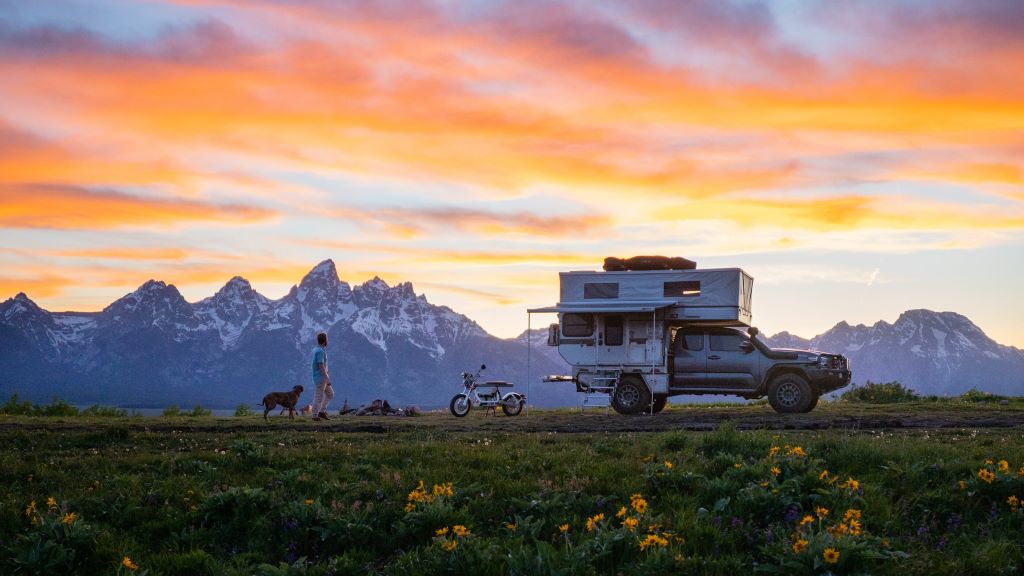
The contemporary landscape of North American road travel has shifted from the utilitarian necessity of the highway motel to the curated, self-contained autonomy of the custom-built camper van. This evolution is particularly pronounced within the high-end tier of the market, where “luxury” is no longer synonymous with the expansive footprint of a Class A motorhome. Instead, it is increasingly defined by the synthesis of high-performance engineering, architectural minimalism, and the radical freedom afforded by sophisticated off-grid capabilities. The result is a travel paradigm that prioritizes the quality of the environment over the sheer quantity of interior square footage.
Navigating this niche requires a fundamental departure from traditional travel planning. It demands an appreciation for the mechanical and logistical constraints of a “rolling home,” balanced against the desire for a seamless, high-touch experience. When the vehicle acts as both the vessel and the destination, the route itself becomes a multi-dimensional design problem: the traveler must reconcile climate, topography, and infrastructure, such as connectivity, power availability, and road accessibility, with the pursuit of aesthetic and restorative experiences.
Understanding “luxury van life routes USA.”
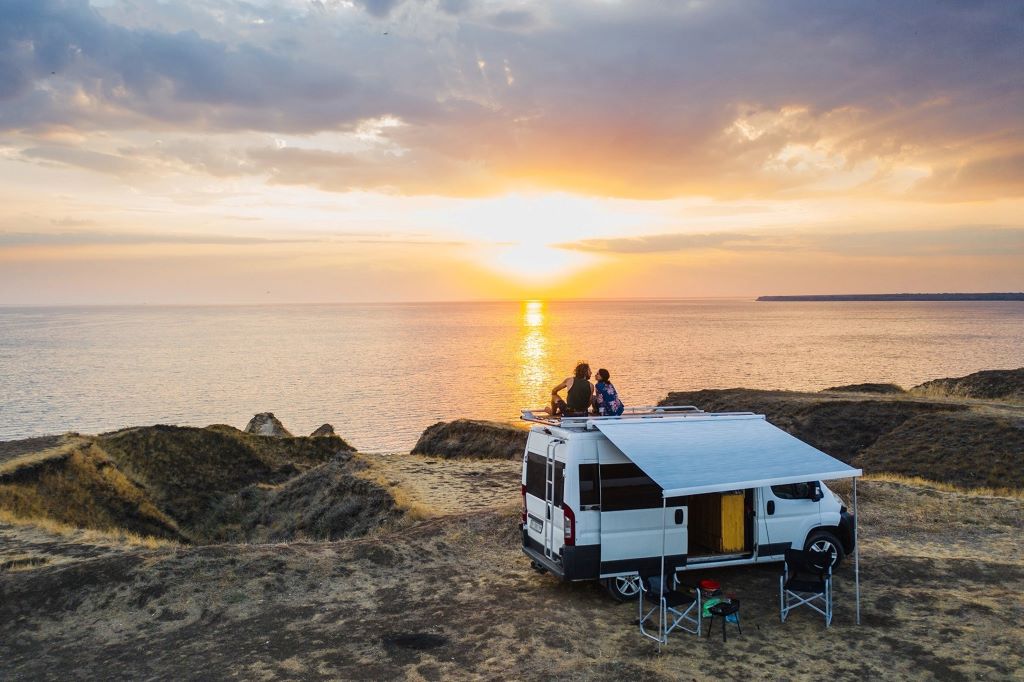
For the modern enthusiast, luxury is rarely about gold-plated fixtures or unnecessary ornamentation; it is, rather, the absence of logistical friction. It is the ability to maintain a consistent standard of living, climate-controlled interiors, high-speed data connectivity, advanced kitchen capabilities, and private sanitary facilities regardless of the geographic isolation of the campsite.
A common misunderstanding is the conflation of “luxury” with “convenience-store amenities.” True high-end van travel is an exercise in resource management. A luxury van is essentially a micro-utility, a hyper-efficient, self-sustaining ecosystem. A route that facilitates this lifestyle provides access to the “luxury of the wild”, pristine, low-density locations without compromising the technical requirements of the vessel. The failure to distinguish between “accessible tourism” (which relies on high-density RV parks) and “true van-life autonomy” (which relies on independent power, water, and waste systems) is where most route planning fails.
Deep Contextual Background: The Evolution of Independent Travel
The shift toward custom-built vans represents a “post-RV” maturation. For decades, the American road trip was the domain of the mass-produced, standardized motorhome, a vehicle designed for convenience but lacking in craft or environmental integration. The modern boutique van movement, conversely, mirrors the “tiny home” and “bespoke architecture” trends. It emphasizes the integration of the vehicle into its environment, the use of high-quality, sustainable materials, and a commitment to professional-grade engineering. This evolution reflects a growing preference for mobility that feels artisanal rather than industrial.
Conceptual Frameworks and Mental Models
-
The Logistical Friction Constant: Every hour spent troubleshooting power, water, or internet is an hour removed from the “luxury” experience. A successful route minimizes the need for maintenance stops by aligning the itinerary with the vehicle’s “autonomy window” (the number of days it can operate off-grid).
-
The Accessibility-Privacy Inverse: Privacy is a premium commodity. The most sought-after routes are those that offer access to high-demand landscapes (national parks, coastal corridors) while providing a “privacy buffer,” the ability to retreat into a self-contained, high-end environment when public spaces become saturated.
-
The Connectivity Lifecycle: Modern luxury van travel relies on digital infrastructure. Routes must be vetted for satellite or cellular data stability to ensure the “remote office” remains functional, effectively decoupling work from geography.
Categorizing Operational and Experiential Models
| Category | Primary Benefit | Operational Demand |
| High-Performance Wilderness | Deep isolation / Off-grid | High (Self-sufficiency) |
| Cultural/Coastal Corridor | Access to services / Social | Low (Infrastructure-rich) |
| Adaptive-Reuse Exploration | Historical / Architectural | Moderate (Navigation) |
| Seasonal Migration | Climatic optimization | High (Planning/Forecasting) |
Matching your vessel’s capabilities (battery capacity, water storage, heating/cooling efficiency) to the category of the route is the single most effective way to prevent the “logistical burnout” that plagues novice travelers.
Detailed Real-World Operational Scenarios
-
The Connectivity Void: A traveler routes through a remote canyon system in the Mountain West, ignoring the lack of cell service for a critical professional call. Second-order effect: A frantic, high-stress detour that ruins the planned stay. Mitigation: Real-time map-caching and Starlink integration.
-
The Topographical Mismatch: A high-top, long-wheelbase Sprinter attempts to navigate narrow, low-hanging forest-service roads in the Appalachians. Failure mode: Structural damage and inability to turn around. Mitigation: Vehicle-specific GPS planning (e.g., Garmin RV).
-
The Utility Overload: An itinerary is built on the assumption of finding nightly hookups, only to encounter full parks and a lack of water. Second-order effect: The luxury van intended for freedom becomes a stressed-out commuter vessel looking for a dump station.
Planning, Cost, and Resource Dynamics
| Resource Type | Sustainability/Reliability Impact | Financial Complexity |
| Power Infrastructure | High (Critical) | High (Initial Investment) |
| Connectivity Systems | High (Operational) | Moderate |
| Vehicle Maintenance | Moderate (Ongoing) | High (Proactive) |
The cost of luxury van life is not just the price of the van, but the “hidden cost” of maintaining high-end systems in harsh, mobile conditions. Budgeting should include an “operational contingency fund,” a 15–20% buffer for on-the-road service and unforeseen repairs.
Tactical Strategies and Support Systems
-
The “Double-Anchor” Itinerary: Plan for a “Hard Anchor” (a reserved, high-end site with power) every 3-4 days to facilitate full system resets (deep charging, water dumping, cabin cleaning), and “Soft Anchors” (dispersed locations) for the intermediate days.
-
The “Pre-Flight” Check: Adopt an aviation-style checklist for every departure (e.g., cabinet locks engaged, water valves closed, battery state-of-charge verified).
-
Seasonal Mapping: Map your travel against historical climate patterns rather than arbitrary calendar dates to ensure the van’s heating/cooling systems are operating within their “peak efficiency” range.
The Risk Landscape: Failure Modes
-
The “System Drift”: As a van is lived in, small technical issues (a loose wire, a slow leak) become cumulative. If not caught during maintenance cycles, they can lead to total system failure in remote areas.
-
Regulatory Fragility: The legal landscape of dispersed, high-end camping is constantly changing. A route that was open last year may be closed today. Always check local land-management status (BLM, Forest Service) before arrival.
-
Environmental Corrosion: Salt air, high UV exposure, and vibration, the constant “stress” of the road will accelerate the wear on luxury finishes. Proactive detailing and system checkups are a non-negotiable expense.
Governance, Maintenance, and Long-Term Adaptation
-
The Maintenance Cadence: Schedule deep-cleanings and system diagnostics every 5,000 miles. Think of this not as “maintenance,” but as “life-support.”
-
The Adaptive Log: Keep a shared digital log of “route performance” where the van performed well (connectivity, access) and where it failed. This creates a proprietary dataset that guides future trips.
-
Layered Checklist: Evaluate every potential stop against: 1. Road accessibility, 2. Satellite visibility (for internet), 3. Proximity to services, 4. Thermal management needs.
Measurement, Tracking, and Evaluation
-
Leading Indicator: The “System-Up-Time.” If you are spending more than 10% of your travel time performing “logistical management” (dumping, refilling, troubleshooting), the route or the vessel is not optimized for your needs.
-
Qualitative Signal: The “Restorative Index.” Does the destination actually provide the mental clarity expected, or is it overshadowed by the stress of navigating the location?
-
Quantitative Signal: The “Cost-Per-Day” variance. If your daily operating costs are consistently spiking due to emergency services, your route planning lacks the necessary infrastructure checks.
-
Documentation Example: The “System Resilience Log” is a private journal detailing how the van’s power and water systems held up over a specific 30-day route segment.
Deconstructing Misconceptions
-
“It’s just like a hotel room, but in nature”: It is a high-performance vessel that requires constant user-maintenance.
-
“Spontaneity is the peak of the experience”: In reality, the best luxury trips are those where you have the freedom to be spontaneous because the logistics have been pre-stabilized.
-
“The most expensive van is the best van”: The “best” van is the one whose technical capabilities perfectly match the requirements of your chosen route.
-
“You can go anywhere”: You are limited by the physical dimensions of the vehicle, the weight of the fuel, and the topography of the land.
Ethical and Contextual Considerations
The increasing popularity of remote, high-end van travel places pressure on local ecosystems and public lands. Ethical stewardship involves “leaving no trace” in the most absolute sense, including waste management that exceeds regulatory minimums, and choosing routes that support local economies rather than exploiting public infrastructure. Your presence is an ecological impact; be intentional about it.
Conclusion
The pursuit of the ideal luxury van life routes USA trip is an exercise in managing the intersection of high-performance architecture and the unpredictability of the natural world. It requires the traveler to set aside the generic appeal of “van life” marketing and engage with their vehicle as a specialized, self-sustaining resort. By prioritizing operators who focus on system reliability, spatial efficiency, and environmental resilience, and by planning with an analytical eye toward logistical friction, one can transform the chaotic nature of the road into a refined, restorative, and truly autonomous living experience. The success of the journey lies not in the final coordinates but in the capability of the vessel to sustain the traveler comfortably in the places they choose to inhabit.