American Cultural Heritage Tours: A Definitive Guide for the Analytical Traveler
The American historical landscape is not a static monolith of dates and monuments; it is a layered, often contentious narrative of migration, conflict, industrial transition, and cultural synthesis. Engaging with this heritage requires a departure from the superficial consumption of historic sites and a commitment to understanding the systemic forces that have shaped the nation’s diverse regional identities. The challenge for the contemporary traveler lies in the fact that institutionalized narratives often prioritize sanitized, idealized histories, leaving the complex, uncomfortable, and foundational realities of the past obscured.
Effective navigation of this terrain demands a critical, analytical posture. It is not sufficient to visit a landmark; one must understand the provenance of the site’s preservation, the voices that remain absent from its curation, and the evolving socio-economic contexts that maintain its relevance. This approach transforms a routine trip into an act of cultural inquiry, where the primary objective is the reconciliation of physical sites with the broader, often fractured, historical record.
This article provides a structural framework for navigating the depth of the national heritage. It rejects the “checklist” approach to travel, instead offering methodologies for evaluating the authenticity, integrity, and depth of historical experiences. By synthesizing the logistical requirements of travel with the philosophical requirements of historical research, this resource aims to equip the discerning visitor with the tools necessary to engage with the past in a way that is both intellectually challenging and deeply immersive.
Understanding “American Cultural Heritage Tours”
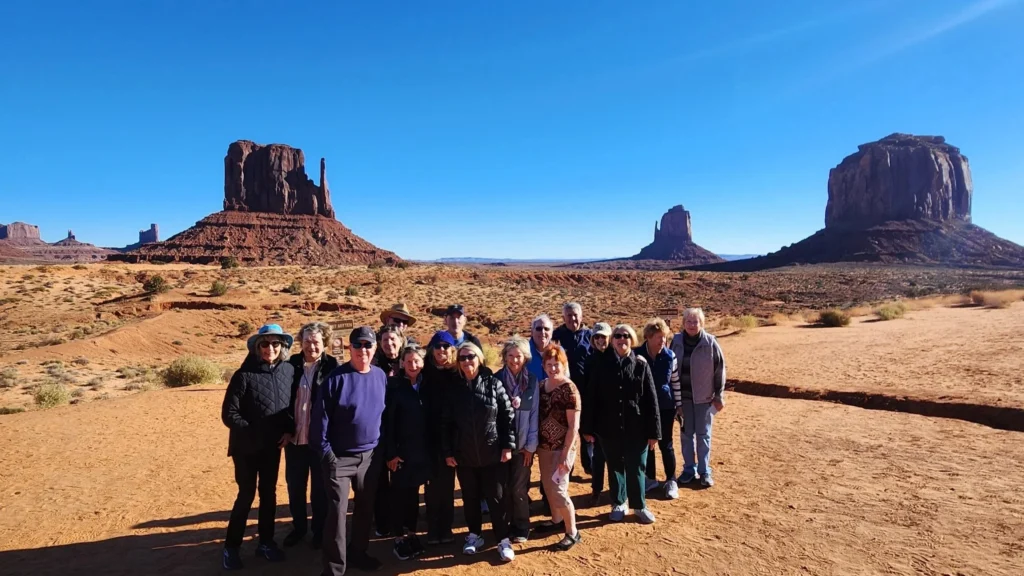
The discourse surrounding American cultural heritage tours is frequently obscured by the commercialization of history. In the marketplace, “heritage” is often reduced to an aesthetic, a romanticized vision of a pastoral or colonial past that overlooks the systemic inequities and hard-fought struggles that actually define the American experience. A common misunderstanding is the belief that a tour is inherently “educational” simply because it utilizes a licensed guide or visits a government-sanctioned landmark. In reality, the most valuable experiences are often those that force a confrontation with nuance rather than providing a comfortable validation of pre-existing narratives.
The systemic challenge is that institutions, whether federal, state, or private, often operate with limited resources and institutional inertia, favoring established, low-friction narratives. Navigating these constraints requires the visitor to act as a secondary curator of their own experience. By approaching a tour not as a final authority but as a data point in a broader inquiry, the traveler can synthesize a more accurate understanding of how historical processes of migration, technology, labor, and ideology have intersected to create the current social fabric.
Deep Contextual Background: The Evolution of Historical Stewardship
The formalization of American heritage stewardship began in earnest during the nineteenth century, driven by a need to create a cohesive national identity in the wake of the Civil War. This era saw the rise of the “great man” model of history, which dominated public narrative for decades. However, the mid-twentieth century brought a radical expansion in the scope of what constituted “heritage.” The National Historic Preservation Act of 1966 marked a pivotal shift, moving beyond singular monuments to include neighborhoods, industrial infrastructure, and cultural districts. This evolution continues today, as the emphasis shifts toward “living history” and the recovery of previously excluded perspectives, such as those of the labor movement, indigenous populations, and the diverse immigrant communities that built the modern American infrastructure.
Conceptual Frameworks and Mental Models
-
The Narrative Layering Model: Treat every historical site as having multiple, overlapping layers—economic, social, technological, and ideological. An effective visit involves uncovering these layers rather than simply accepting the primary theme presented.
-
The Intent-versus-Impact Filter: Analyze why a site was preserved and by whom. Preservation is a political act; understanding the motivation behind a site’s protected status reveals the specific historical values that were being prioritized at that time.
-
The Silence-to-Noise Ratio: Note what is not mentioned in the official signage. The most important historical insights are often found in the deliberate omissions, which signal where the site’s narrative reaches its discomfort threshold.
-
The Physicality-to-Idea Pivot: History is both an idea and a set of material conditions. A site visit should connect the abstract concepts—like the “Industrial Revolution” to the physical realities, such as the specific, brutal working conditions and the spatial layout of the local housing.
Categorizing Operational and Experiential Models
| Category | Primary Focus | Suitability |
| Institutional/Federal | Broad Narrative, Infrastructure | Foundation-Building |
| Community-Based/Niche | Local Experience, Oral History | Deep Contextual Insight |
| Industrial/Technical | Labor, Innovation, Geography | Structural Understanding |
| Thematic/Cross-Regional | Migration, Policy, Trade | Synthesized Knowledge |
Choosing between these requires an assessment of your personal inquiry. If you seek to understand the broad sweep of policy, institutional models suffice. If you seek the “truth of the ground,” the community-based and industrial models provide the most rigorous evidence.
Detailed Real-World Operational Scenarios
-
The Sanitized Landmark: A visit to a preserved colonial manor where the narrative focuses entirely on the architecture, ignoring the enslaved labor that made the estate viable. Decision: The visitor must explicitly ask about the labor systems and seek out supplemental local histories to correct the deficit.
-
The Industrial Ghost Town: An abandoned factory town where the architecture is crumbling. Failure mode: Interpreting the site purely as “aesthetic decay” rather than as a consequence of economic deindustrialization and policy shifts. Second-order effect: A failure to connect historical labor struggles to modern regional economic challenges.
-
The “Living History” Performance: An actor-led tour where the focus is on performance rather than verifiable documentation. Risk: The blurring of reality and theater. Decision: Utilize these sites for mood and physical atmosphere, then verify the historical claims through primary source documentation independently.
Planning, Cost, and Resource Dynamics
| Resource Type | Investment Priority | Variability |
| Reconnaissance | Highest (Non-negotiable) | High |
| Specialist Guides | High (Information Quality) | High |
| Transportation/Entry | Moderate | Low |
The true cost of the American cultural heritage tours experience is not the ticket price, but the reconnaissance required to find meaningful destinations. Professional curators and university-affiliated archives often provide the most accurate, though least marketed, entry points into regional history.
Tactical Strategies and Support Systems
-
The Primary Source Audit: Before arriving at a site, access the local county or regional archives to look for “primary source” documentation—diaries, employment records, or census data from the period in question.
-
The Local Library Inquiry: Regional libraries often hold the most granular, unedited versions of history that national institutions omit. They are the most reliable support systems for deep-dive heritage travel.
-
The “Cross-Site” Methodology: Compare the narratives provided by three distinct sources: the official site signage, an academic peer-reviewed source, and a local community or oral-history account.
-
The Infrastructure Reconnaissance: Treat physical infrastructure roads, railroads, and water works as primary historical evidence. These structures often reveal more about historical priorities than the plaques and monuments.
The Risk Landscape: Failure Modes
-
The Confirmation Bias Trap: Seeking out heritage sites that only confirm a pre-existing view of American history. This prevents the synthesis of complex narratives.
-
The Aestheticization of Poverty: Engaging with sites of historical trauma (such as sites of industrial collapse or displacement) purely for the visual/photographic impact, which devalues the human cost of the history being observed.
-
The Institutional Inertia Risk: Relying on sites that have not updated their interpretative narratives in decades, leading to the consumption of outdated and often inaccurate historical interpretations.
Governance, Maintenance, and Long-Term Adaptation
-
Review Cycles: Elite heritage travelers recognize that historical interpretation is not static. A site visited five years ago may have a completely different narrative today due to updated scholarly research.
-
The Adjustment Trigger: If a visit leaves you with more questions than answers about the social systems behind an event, it is a trigger to pivot from monument-hopping to archive-searching.
-
Layered Checklist: For any tour planning: 1. Evaluate the sponsoring institution’s bias, 2. Identify the specific, excluded groups, 3. Connect the site to broader, non-local historical trends.
Measurement, Tracking, and Evaluation
-
Leading Indicator: The quality of the bibliography or source list provided by the site. If the institution does not cite its sources, treat its claims as “interpretive” rather than “factual.”
-
Qualitative Signal: The “Interrogation Capability.” Does the tour guide or site documentation welcome critical questions? If they are unable or unwilling to address contradictions, the experience is a low-value one.
-
Quantitative Signal: The “Site-to-Context Ratio.” How much time were you spending learning about the context of the history (the labor, the politics, the geography) vs. the monument itself?
-
Documentation Example: The “Historical Inquiry Log” is a document where you record the discrepancies between different interpretations of the same historical event.
Deconstructing Misconceptions
-
“History is a fixed, settled reality”: History is a process of constant re-interpretation. The best tours are those that acknowledge this fluidity.
-
“Patriotic icons are the center of heritage.”The center of American heritage is found in the struggle and synthesis of the everyday people who built the infrastructure of the nation.
-
“Large institutions are always the most accurate”: Large institutions often have the most to lose from modernizing their narratives; smaller, specialized museums are often the most intellectually agile.
-
“Heritage travel is passive consumption”: It is, at its best, a high-level form of research that requires patience, critical judgment, and sustained attention.
Ethical and Contextual Considerations
The ethics of engaging with American cultural heritage tours involve acknowledging the pain and the power dynamics embedded in historical sites. It requires a refusal to romanticize suffering or displacement and a commitment to understanding how the current economic and political realities are direct descendants of these historical processes. Supporting heritage sites that are actively working to include marginalized histories is an ethical imperative for any traveler who values intellectual honesty.
Conclusion
The pursuit of the American cultural heritage tours ecosystem is an engagement with the raw material of the national identity. It is not an endeavor for the casual tourist seeking easy validation; it is for the critical researcher seeking to synthesize a more nuanced understanding of how the past persists into the present. Success in this field lies in the traveler’s ability to remain skeptical, to prioritize primary sources over secondary narratives, and to treat the entire landscape from the grandest monument to the humblest ruin as evidence of the complex, contradictory, and ongoing experiment that is the American project. Through this analytical lens, heritage travel transcends its recreational roots and becomes a fundamental exercise in historical literacy and civic engagement.