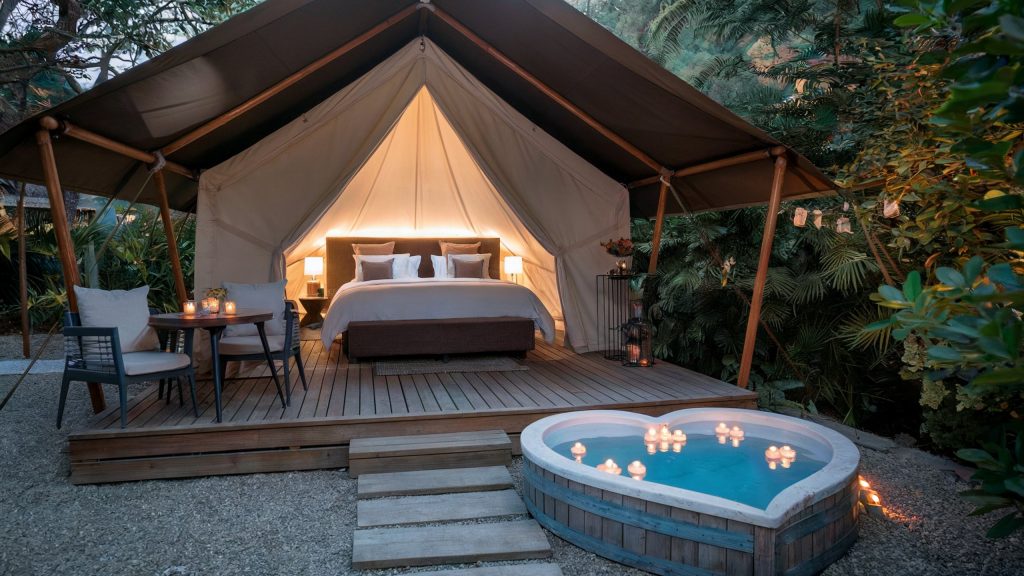
Best Romantic Glamping Options: A Systems-Based Evaluation Guide
The emergence of luxury camping as a dominant segment within the experiential travel market reflects a broader cultural shift toward environments that reconcile natural immersion with the service standards of boutique hospitality. For the traveler, this is not merely a choice of accommodation style but a deliberate selection of an operational model. The most successful properties in this space have moved beyond the initial novelty of “glamping” to establish sophisticated, highly engineered environments that function with the reliability of a high-end estate. These sites are increasingly characterized by permanent, purpose-built structures, sustainable utility management, and a level of privacy that standardized hotels simply cannot replicate.
The challenge of selecting from this category is that the sector is currently suffering from a lack of standardization. A property may label itself as a luxury retreat while failing to provide basic service redundancies or sufficient acoustic insulation, leading to an experience that is physically uncomfortable and logistically fragile. The discerning traveler must move past the aesthetic marketing and the curated imagery of sunsets and fire pits to evaluate the underlying infrastructure of the site. True mastery in this domain requires an analytical look at site management, utility independence, and the resilience of the service architecture.
Understanding “best romantic glamping options.”
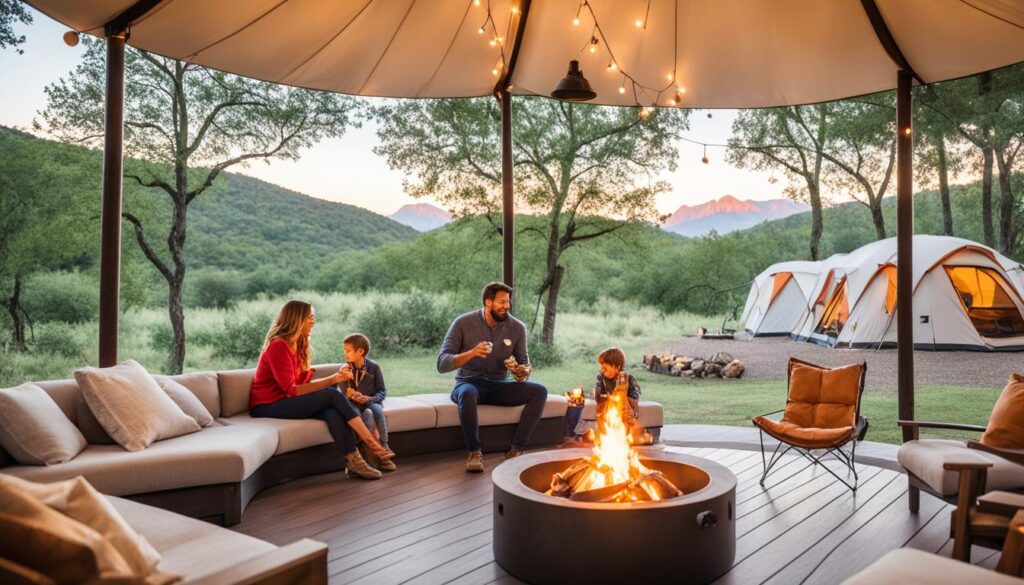
The search for the best romantic glamping options is frequently hampered by the industry’s tendency to use “glamping” as a catch-all term that obscures significant functional differences. A site might categorize itself as a high-end retreat while operating with a density that results in a high-traffic, noisy environment, effectively nullifying the traveler’s desire for seclusion. To understand the reality of this segment, one must look past the demographic label and evaluate the service architecture. Is the property designed for autonomous exploration, or is it a high-volume facility that merely uses non-traditional building materials? Oversimplification in this sector is a frequent source of logistical failure.
Deep Contextual Background: The Evolution of Immersive Travel
The trajectory of outdoor-luxury travel has evolved from the mid-20th-century model of high-density “cabin resorts” to the contemporary era of hyper-segmented, context-aware estates. Early iterations were often defined by a uniformity that sought to provide a singular experience. The modern era, however, is defined by the “focal density” model, where developers and operators create smaller, highly specified footprints. This is a response to the globalization of luxury, where the discerning traveler expects a property to be not only secluded but also culturally and environmentally coherent. This evolution marks a transition from viewing the outdoor-only policy as an amenity itself to viewing it as a prerequisite for the more complex service architecture that characterizes true high-end, immersive hospitality.
Conceptual Frameworks and Mental Models
-
The Site-Density Model: The effectiveness of a property is inversely proportional to the amount of interaction entropy present. As guest density increases, friction (competition for resources, noise, logistical delays) increases. The most successful properties are designed for “peak-load” capacity, ensuring service remains seamless even during high occupancy.
-
The Utility-Resilience Index: In immersive environments, service should be a background state. A site that relies on fragile, off-grid power or water systems without robust redundancies indicates a failure in site planning.
-
The Site Lifecycle Model: Treat every property as a physical asset that decays. A site that is five years old but demonstrates a culture of preventive maintenance is significantly more reliable than a new, prestige-brand property that relies on aesthetic updates to mask structural neglect.
-
The Indigenous Coherence Metric: Does the property’s operational logic align with its environment? Properties that use local materials, passive climate control, and indigenous service workflows tend to be more resilient and provide a more authentic experience than those that attempt to replicate a standardized global luxury model.
Categorizing Operational and Design Models
| Category | Operational Philosophy | Primary Performance Variable |
| Bespoke Private Estates | Autonomy-first | Total seclusion/Asset exclusivity |
| Integrated Boutique Sites | Service-managed | Ease of access/Resource density |
| Regulated/Outdoor Resorts | Predictability | Uniform service standards |
| Eco-Adaptive Villas | Environment-first | Natural immersion/Structural integrity |
When considering the best romantic glamping options, these categories help clarify the intended experience. A traveler seeking the seclusion of a private estate will find a high-density, regulated resort model incompatible, even if both are categorized as “luxury glamping.”
Detailed Real-World Operational Scenarios
-
The Professional Itinerary: The goal is high-intensity engagement with a remote environment. The constraint is the reliance on a single, high-fidelity staff point-of-contact. Failure mode: a breakdown in that single communication link leads to an immediate loss of service utility.
-
The Total Isolation Objective: The goal is pure detachment. The constraint is the acoustic and visual design of the unit. Failure mode: the proximity of neighboring units negates the sense of seclusion, creating an environment that feels no different from a standard, high-density hotel.
-
The Service-Integrated Retreat: The goal is to move from a high-stress professional environment to a low-friction space. The constraint is the scheduling of amenities. Failure mode: the property’s reliance on fixed, non-variable scheduling prevents the guest from achieving the desired level of rest and flexibility.
Planning, Cost, and Resource Dynamics
| Resource Type | Investment Priority | Strategic ROI |
| Foundation Asset | High | Structural privacy/Acoustics |
| Service Integration | Medium | Friction reduction |
| Maintenance Culture | High | Long-term operational reliability |
The shadow cost of selecting a property without proper vetting is the “friction tax.”
Tactical Strategies and Support Systems
-
Property-Level Vetting Ledger: Maintain a record of management stability and recent facility upgrades. Stability at the management level is the single most reliable predictor of consistent service quality.
-
Direct-Interface Testing: Test the property’s responsiveness by contacting them with a complex, non-standard request before booking. The quality of the response will tell you more about the property’s actual service philosophy than any marketing brochure.
-
Topographic Analysis: Utilize satellite imagery to map the density and privacy of the units. Marketing often uses flattering angles to imply seclusion where none exists in reality.
-
The “Base State” Requirement: Request documentation on how the property handles service delivery in the event of local infrastructure failures. A high-performance estate will have redundant, internally managed utility systems.
The Risk Landscape: Failure Modes
-
The “Design Over Function” Trap: Many properties fall into the category of being visually striking but ergonomically poor. Avoid properties where aesthetic choices have overridden the basics of comfort, such as unit temperature regulation, noise insulation, and furniture design.
-
Operational Drift: Properties that are poorly managed can suffer from a “hollowed-out” experience where they retain the aesthetic of luxury but have lost the high-quality staff and maintenance standards necessary to support it.
-
Environmental Sensitivity: In remote or ecologically significant locations, the failure to manage the property’s footprint can lead to a degraded experience, as the environment around the property loses the very qualities that made it attractive.
Governance, Maintenance, and Long-Term Adaptation
-
Management Tenure: High-performance estates tend to retain senior management for longer periods. Short-term turnover is a warning sign of poor governance.
-
Preventive Infrastructure Audits: Ask about the property’s maintenance philosophy. A management team that discusses preventive, scheduled infrastructure upgrades is a team that understands the asset lifecycle.
-
The Rolling Review Cycle: The best romantic glamping options are those that actively solicit, analyze, and implement guest feedback to adjust their service workflows. If a property seems static in its offerings, it is likely stagnating in its operational philosophy.
Measurement, Tracking, and Evaluation
-
Qualitative Signal: Do you feel a sense of unease or cognitive load when interacting with the property’s staff? If so, the service architecture is failing to provide the intended “background” experience.
-
Quantitative Signal: The “Request-to-Execution” delta is the time from requesting an amenity to the moment it is fulfilled. In a well-managed estate, this delta should be minimal and predictable.
-
Documentation Example: Maintain a private ledger during the stay, documenting “friction points” at any moment where the experience was interrupted by the mechanics of the property operation.
Deconstructing Misconceptions
-
“Outdoor-living means lack of privacy”: Modern site design can achieve higher levels of acoustic and visual privacy than traditional hotels.
-
“Prestige branding equals quality”: Luxury branding is often an expensive layer of marketing that bears no relation to the quality of the property management.
-
“Photos are evidence”: In the digital age, photography is a tool for marketing, not a record of the current physical state of the property.
-
“All-inclusive is the baseline”: Many high-performance estates are not all-inclusive, as a la carte management often incentivizes higher-quality food and service standards.
Ethical and Contextual Considerations
The ethical traveler must consider the property’s role in its host community. Properties that are integrated socially, economically, and environmentally tend to be more resilient and provide a more authentic experience. When evaluating the best romantic glamping options, consider the property’s sustainability record, its employment practices, and its engagement with the local ecology. These factors are not merely “extras”; they are indicators of the property’s long-term commitment to its environment and, by extension, the quality of the stay it can provide.
Conclusion
The successful selection of the best romantic glamping options is an exercise in rigorous filtering and operational due diligence. By moving past the superficial labels and evaluating properties as complex, functioning ecosystems, the traveler can insulate themselves from the common stressors of modern lodging. True quality in this sector is found in the intersection of structural privacy, intelligent service architecture, and long-term facility governance. Mastery is achieved not through the simple selection of a high-priced brand, but through the deliberate identification of environments where the logistical mechanics of the property are entirely aligned with the intended goal of the stay, allowing for an experience that is as seamless as it is transformative.