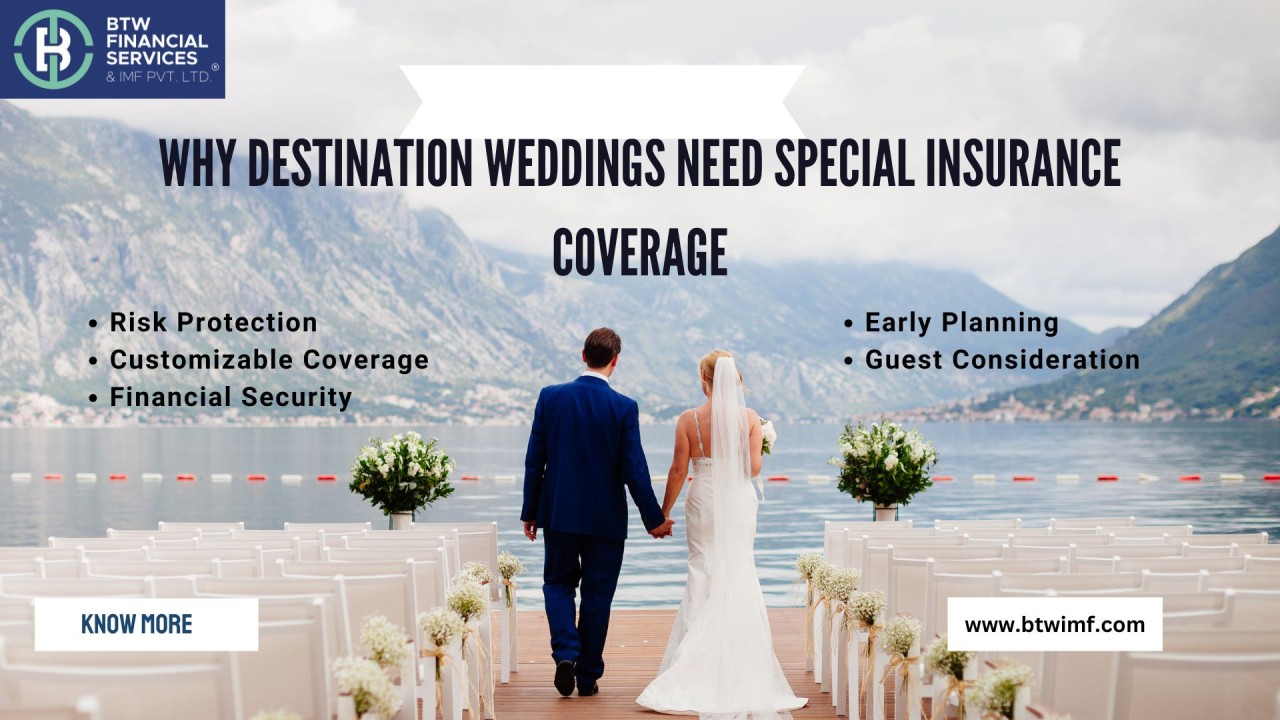
Destination Wedding Insurance Plans: The Definitive Vetting Guide
The orchestration of a cross-border ceremonial event involves a complexity of logistical variables that far exceeds standard event planning. When a marriage ceremony is relocated from a domestic environment to an international jurisdiction, the risk profile shifts dramatically, exposing organizers to volatile factors ranging from geopolitical instability and environmental hazards to the intricate, often opaque regulatory requirements of foreign legal systems. For the professional planner or the self-managed couple, the transition of the event lifecycle from a local context to a destination context necessitates an entirely different approach to risk mitigation and financial governance.
Financial protection for these high-stakes events is frequently misunderstood as a simple add-on to traditional travel coverage. In reality, the architecture of risk management for a global wedding is a layered, multi-faceted discipline. It requires an integrated approach where property liability, vendor non-performance, and individual participant welfare are treated as distinct but interdependent operational risks. Without a structured methodology for assessing and ensuring these variables, organizers remain vulnerable to catastrophic financial outcomes that can occur with little warning.
This analysis provides the technical foundation for evaluating and procuring protection for high-value international events. It moves beyond the retail-level marketing of travel insurance, exploring the systemic components of comprehensive liability and indemnity. By focusing on the structural nuances of contractual risk, environmental contingency, and long-term asset protection, this guide serves as a definitive reference for those tasked with ensuring the operational continuity of a global event.
Understanding “destination wedding insurance plans.”

The discourse surrounding destination wedding insurance plans is frequently distorted by the conflation of event-specific liability coverage with general trip cancellation insurance. A comprehensive protection strategy requires the synthesis of both. Event insurance typically covers risks specific to the wedding ceremony and reception, such as vendor default, cancellation due to extreme weather, or damage to the venue, while travel insurance is designed to protect the individuals involved during transit. Relying on one to perform the duties of the other is a common source of catastrophic coverage gaps.
Oversimplification in this sector presents a profound structural risk. Many assume that their venue’s policy or their credit card’s travel benefits provide adequate protection. However, most venue policies are strictly limited to the property’s liability and do not cover the organizer’s financial loss if the event is cancelled. Similarly, credit card benefits are often restricted to the specific, narrow perils outlined in their terms of service, which may exclude the very reasons most likely to disrupt a global event. Mastering destination wedding insurance plans involves a detailed audit of policy language to ensure that “force majeure” clauses, vendor insolvency, and logistical failure are explicitly addressed. Failure to conduct this level of due diligence often leads to a situation where the event is under-insured at the moment of maximum vulnerability.
Deep Contextual Background: The Evolution of Event Liability
Historically, ceremonial events were contained within local legal and social frameworks, where the risks of cancellation or disruption were mitigated by close vendor relationships and localized resource management. The globalization of event planning changed this dynamic entirely. As weddings migrated to exotic locales, the legal and financial protections that were once implicit became explicit, complex, and highly variable. The rise of a dedicated insurance market for international events reflects a necessary adaptation to this increased volatility, where the financial exposure of a single event can now reach seven figures, necessitating a professional-grade approach to risk transfer.
Conceptual Frameworks and Mental Models
-
The Exposure-Coverage Gap: Treat your event budget as an asset to be protected. The gap between your total potential loss and your insured coverage is your direct financial exposure. The objective is to bring this exposure to zero through a combination of policy types.
-
The Multi-Jurisdictional Risk Model: Recognize that event laws change at every border. An insurance policy written in one jurisdiction may be unenforceable in another. Risk management must be localized to the venue country while maintaining a domestic safety net.
-
The Dependency-Trigger Framework: Map every event element (photographer, venue, caterer) to a corresponding trigger in your insurance policy. If a vendor defaults, does your policy provide a direct payout, or does it require a lengthy legal process to define “default”?
-
The Redundancy-Optimization Ratio: Avoid duplicative protection. If your chosen venue already carries liability insurance for the event date, ensure your policy is focused on event-specific risks rather than general liability, which would be an unnecessary expense.
Key Categories and Policy Variations
| Policy Category | Focus | Primary Trigger |
| Event Liability | Third-party claims | Injury or property damage |
| Event Cancellation/Postponement | Financial recovery | Unforeseen disruption of the event |
| Vendor Non-performance | Contractual fulfillment | Vendor bankruptcy or breach |
| Comprehensive Event Suite | Holistic protection | Combined peril coverage |
When selecting from destination wedding insurance plans, it is critical to prioritize vendor non-performance and event cancellation, as these represent the highest frequency of loss in the current maritime/global landscape.
Detailed Real-World Operational Scenarios
-
The Geopolitical Pivot: Your event is scheduled in a region experiencing sudden social unrest. The constraint is the “declaration of danger” status by your home country. Failure mode: insurance policies often have exclusions for “known events.” You must secure coverage before a risk becomes “known.”
-
The Primary Vendor Default: Your key caterer or decorator goes bankrupt three weeks before the ceremony. The constraint is the contract timeline. Failure mode: the policy requires proof of bankruptcy filings, which may lag behind the actual cessation of business.
-
The Environmental Catastrophe: An extreme weather event renders the venue inaccessible. The constraint is the “Act of God” clause. Failure mode: the policy may cover the venue cost but not the non-refundable international airfare for the entire guest list.
Planning, Cost, and Resource Dynamics
| Resource Type | Investment Priority | Expected Amortization |
| Comprehensive Suite | High | Protects the entire capital outlay |
| Direct Liability Policy | Moderate | Mitigates legal/civil risk |
| Ancillary Rider (e.g., Weather) | Low/Conditional | Risk-specific mitigation |
The opportunity cost of insufficient protection is the total loss of the investment, compounded by the inability to reschedule in an international context. Properly designed destination wedding insurance plans amortize their cost by replacing catastrophic, non-recoverable losses with a predictable insurance premium.
Tactical Strategies and Support Systems
-
Contractual Alignment: Ensure your insurance policy terms match your vendor contract terms exactly. If a contract has a “force majeure” clause, your insurance should be explicitly briefed to cover the gaps.
-
The “Proof of Peril” Ledger: Pre-identify the types of documentation (e.g., local police reports, government advisories, bankruptcy filings) required for each policy trigger.
-
Broker Specialization: Only work with brokers who specialize in international event coverage. Generalist brokers often fail to account for the nuances of cross-border legalities.
The Risk Landscape: A Taxonomy of Failure
-
Exclusion Ambiguity: Policies often exclude “unreasonable expectations.” If an event is delayed by 30 minutes, it is not a claim. If it is delayed by 6 hours, it might be. Ambiguity is the enemy of recovery.
-
The “Knowable Risk” Exclusion: Any event that could have been predicted (e.g., planning a wedding in a known hurricane zone during hurricane season) may be excluded from coverage.
-
Jurisdictional Incompatibility: The inability to translate the insurance payout into the currency or legal tender required by the foreign venue.
Governance, Maintenance, and Long-Term Adaptation
-
Pre-Event Audit: Conduct a full policy review 90 days before the event. Has the risk profile changed? Has the vendor list shifted?
-
Trigger Documentation: Ensure the couple and the planner have a unified digital repository for every signed contract and its associated insurance certificate.
-
Review Cycles: As the date approaches, re-verify the “covered perils” list to account for any new developments in the destination country.
Measurement, Tracking, and Evaluation
-
Leading Indicators: The speed with which an insurer responds to “pre-event” questions. If they are slow now, they will be catastrophic during a crisis.
-
Quantitative Signal: The coverage-to-loss ratio. Does the policy cover 100% of the financial liability, or is it capped at 50% of the budget?
-
Example Documentation: A “Risk Exposure Ledger” that tracks every line item of the budget against the corresponding insurance policy section.
Deconstructing Misconceptions
-
“My venue is insured”: The venue’s insurance protects the venue, not the bride and groom’s investment.
-
“Everything is covered by force majeure”: Force majeure is a contract concept, not an insurance policy; it rarely results in a refund for expenses already incurred.
-
“Travel insurance covers weddings”: Travel insurance covers the trip; event insurance covers the ceremony.
-
“I can buy it later”: Most policies have strict windows for purchase; buying too late often triggers “known peril” exclusions.
Ethical and Contextual Considerations
The selection of destination wedding insurance plans should also consider the financial stability of the insurer itself. In a global event crisis, you need a provider with the liquidity to pay out across borders. Prioritizing providers with a proven track record in international event indemnity is not just a strategic choice; it is the responsible foundation for a high-stakes, cross-border endeavour.
Conclusion
The orchestration of a global wedding is an exercise in risk management as much as it is an exercise in creative planning. By systematically deconstructing the financial and legal variables and by securing destination wedding insurance plans that are robust, localized, and explicitly aligned with contractual realities, organizers can insulate their capital and their peace of mind from the inherent volatility of international environments. True authority in this space is found in the ability to anticipate failure modes before they manifest, ensuring that the ceremony’s objective, the union itself, is protected from the logistical and financial disruptions of the global landscape.