Top Couples Cabin Plans: A Professional’s Vetting Guide
The procurement and habitation of a high-end, dedicated cabin for two requires a nuanced understanding of facility management, site-level logistics, and the specific physiological requirements of a restorative retreat. Unlike standard hospitality experiences, where the guest is a passive recipient of service, a cabin-based engagement shifts the responsibility of operational flow toward the occupant. This transition from passive consumer to active curator of one’s environment necessitates a deep level of foresight, particularly when the objective is to secure a private, resilient, and structurally sound space for an extended duration.
In the current market, the proliferation of “romantic” branding has obscured the operational reality of many properties. A facility may market itself with evocative imagery while failing to provide the foundational infrastructure, such as reliable climate control, acoustic privacy, or a stable communication pathway, that are necessary for a successful, low-friction stay. The modern traveler must therefore approach the identification of suitable lodgings with the analytical scrutiny of an asset manager, vetting the property’s architectural provenance and managerial stability before committing resources to the engagement.
Understanding “top couples cabin plans.”
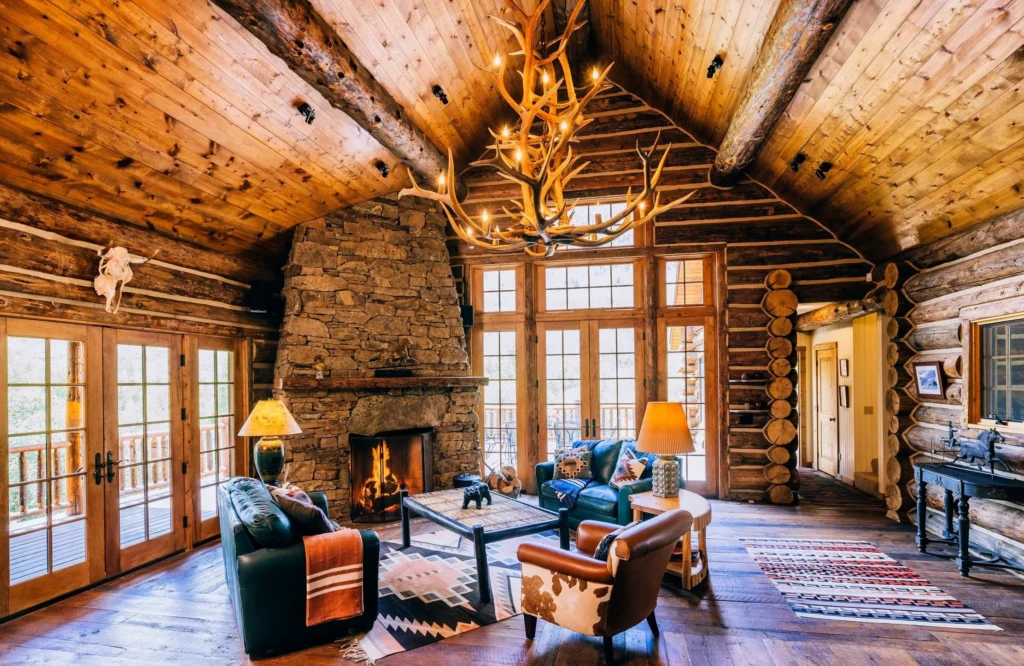
The search for top couples’ cabin plans is frequently distorted by marketing narratives that prioritize visual aesthetics over operational reliability. In this context, a “plan” refers to the entire operational strategy of the retreat, encompassing how the facility is governed, maintained, and accessed by the guest. A significant misunderstanding persists among travelers who view a cabin purely as an architectural object, ignoring the fact that it is a functioning, complex system that requires professional-grade management to remain viable for a long-term stay. The risk of oversimplification is high; when one evaluates a cabin without considering the maturity of its management or the robustness of its infrastructure, they are delegating the quality of their experience to chance.
Deep Contextual Background: The Evolution of Cabin Hospitality
The cabin has historically evolved from a utilitarian, agrarian structure into an aspirational leisure asset. The mid-to-late 20th century saw the emergence of the commercialized “cabin getaway,” often defined by its architectural uniformity and accessibility. Today, we are witnessing a divergence: the rise of the high-fidelity, site-specific retreat that integrates advanced climate-control technology, high-speed digital infrastructure, and professional-level site management. This evolution reflects a broader demand for environments that provide the physical immersion of the outdoors without the operational risks of traditional, primitive camping.
Conceptual Frameworks and Mental Models
-
The Logistical Resilience Index: Evaluate a property’s ability to remain functional during environmental anomalies. Does the cabin have independent power, water, or communication redundancies? If not, the facility is inherently fragile.
-
The Acoustic Isolation Model: Privacy is the primary utility of a cabin. Assess the property’s site density and the building envelope’s sound-dampening capabilities. A cabin that is structurally sound but situated in a high-density, high-traffic zone fails the privacy requirement.
-
The Management-Service Loop: A property’s performance is determined by the speed and effectiveness of its management response. Properties with long-tenured, on-site managers generally provide higher utility than those managed remotely by third-party agencies.
-
The Asset Lifecycle Perspective: View the cabin as a professional facility that undergoes wear and tear. A property that demonstrates a clear commitment to preventive maintenance, addressing minor issues before they become major failure modes, is a far more valuable resource than a property that prioritizes seasonal aesthetic refreshes.
Categorizing Operational and Architectural Models
| Category | Operational Philosophy | Primary Performance Variable |
| Institutional Cabin Retreats | Standardized luxury | Consistency/Reliability |
| Bespoke Architect-Led Units | Design-driven | Aesthetic/Architectural fidelity |
| Heritage Adaptive Reuse | Cultural/Historical | Atmospheric immersion |
| Expeditionary/Off-Grid Units | Utility/Independence | Environmental autonomy |
When evaluating the couple’s cabin plans, prioritize the model that best matches the required level of support. A traveler who requires total logistical ease should avoid the Expeditionary model, regardless of its architectural appeal.
Detailed Real-World Operational Scenarios
-
The High-Intensity Professional Retreat: The couple needs a high-utility environment that allows for both focus and rest. The constraint is a stable digital infrastructure and a reliable service environment. Failure mode: relying on a remote cabin that lacks a robust, independent communication protocol, leading to total operational paralysis when the connection drops.
-
The Total Privacy Mandate: The goal is maximum seclusion. The constraint is site density. Failure mode: choosing a “romantic” site that is located on a public access route or shared road, creating an environment that feels communal rather than private.
-
The Ecological Immersion Scenario: The goal is to live within a specific environment. The constraint is the cabin’s climate control. Failure mode: selecting a unit that looks aesthetic but lacks the insulation or heating/cooling capacity to maintain comfort in extreme, unpredictable weather.
Planning, Cost, and Resource Dynamics
| Resource Type | Investment Priority | Impact on ROI |
| Structural Foundation | High | Privacy/Acoustics |
| Operational Support | High | Logistical ease/Safety |
| Documentation/Auditing | Moderate | Risk mitigation/Alignment |
The “shadow cost” of an improperly managed cabin stay is significant, encompassing the time lost to addressing logistical errors and the emotional tax of managing a space that does not function as intended. Properly vetted top couples’ cabin plans amortize this cost by replacing uncertainty with a controlled, professional environment.
Tactical Strategies and Support Systems
-
The Site-Integrity Audit: Use satellite mapping and topographical data to assess the cabin’s proximity to noise-generating assets, roads, or other high-density buildings.
-
Direct-Management Vetting: Engage the property manager with specific questions about the cabin’s utility infrastructure. Their ability to explain the systems (HVAC, power, insulation) is an indicator of operational maturity.
-
The “Zero-Day” Stress Test: If your stay requires specific support (e.g., high-speed data, specific kitchen equipment), confirm these requirements in writing before confirming the reservation.
-
The Resilience Ledger: Track the property’s management history. High-performing facilities are generally managed by individuals with long-term tenure in the hospitality sector.
The Risk Landscape: Taxonomy of Failure
-
Acoustic Intrusion: The most frequent failure in cabins marketed as “private.” The physical structure may be isolated, but if the site design fails to manage sound transmission from neighboring units, the privacy is non-existent.
-
Utility Cascades: Independent units are highly susceptible to single-point failures in utility management. A single failure in a proprietary water pump or power system can lead to total operational collapse.
-
Protocol Drift: The gradual decline in maintenance and service standards as the property ages or management priorities shift, leading to a “ghost” of a luxury cabin that has lost its actual utility.
Governance, Maintenance, and Long-Term Adaptation
-
Management Stability: Stable leadership is the single best predictor of operational consistency.
-
Proactive Repair Cycles: Top-tier cabin estates treat maintenance as a continuous process, not a periodic event.
-
Continuous Feedback Integration: A property that explicitly asks for, analyzes, and acts on guest feedback regarding facility performance is likely to remain relevant and reliable.
Measurement, Tracking, and Evaluation
-
Leading Indicators: The speed and analytical clarity of pre-arrival communications.
-
Qualitative Signal: The “friction factor” is the degree to which you find yourself needing to manage the facility rather than enjoying it.
-
Quantitative Signal: The average time taken to resolve an equipment or utility issue during your stay. A high-fidelity operation resolves these issues proactively or with extreme speed.
Deconstructing Misconceptions
-
“Remote equals quiet”: Remote locations can be noisy due to local wildlife, wind, or industrial activity. Privacy is a design choice, not a geographic byproduct.
-
“Architectural design equals utility”: Many cabins are designed for visual impact, not ergonomic or functional performance.
-
“Star ratings reflect reality”: Ratings are often skewed by the emotional state of the guest and are rarely a technical evaluation of the facility’s actual infrastructure.
-
“All cabins are created equal”: The operational variance between a well-managed estate and an owner-operated unit is enormous.
Ethical and Contextual Considerations
The selection of couples’ cabin plans should involve an awareness of the site’s impact. Estates that prioritize ecological preservation and local integration are not only more ethicabut l, they are also better managed. A property that is integrated into its surroundings is more resilient, has a deeper understanding of local challenges, and is generally more capable of delivering a high-fidelity experience to the guest.
Conclusion
The pursuit of an optimized, high-fidelity cabin retreat is an exercise in discerning operational reality from marketing aspiration. By applying a structured, systems-based approach to the evaluation of these facilities, one can identify the top couple of cabin plans that provide a truly stable, supportive environment. The objective is to secure an estate where the logistical complexities of habitation are managed by professional systems, allowing the couple to enjoy the environment without the distraction of facility-level failure. In an industry defined by aesthetic marketing, true authority lies in the ability to distinguish the structural excellence of a managed estate from the superficial beauty of an improperly governed project.