Compare Couples Spa Options: A Professional Vetting Guide
The global wellness sector has evolved from a boutique auxiliary service into a sophisticated, highly fragmented industry, where the “couples” experience is no longer a standardized amenity but a complex logistical and therapeutic design. For the discerning practitioner of luxury travel and wellness, the selection of a wellness environment requires more than a casual review of service menus; it demands a granular assessment of the facility’s operational architecture. As the market pivots toward extreme specialization, the primary challenge for the consumer is to distinguish between mass-market wellness products, which emphasize high-volume, generic sensory experiences and high-fidelity, purpose-built environments designed to sustain genuine physiological and interpersonal outcomes.
This transformation in the wellness landscape necessitates a shift in how we approach the selection process. When the objective is to maximize the therapeutic potential of a shared experience, the environment becomes as critical as the therapy itself. Achieving objective clarity in this domain requires a shift from passive consumption to active vetting. By deconstructing the spa experience into its parts, infrastructure, professional governance, protocol, and atmospheric design, one can move past the limitations of brochure marketing. This analysis provides the framework required for a disciplined, systems-based evaluation of wellness facilities, ensuring that the selection process aligns with the actual technical reality of the services offered.
Understanding “compare couples spa options.”
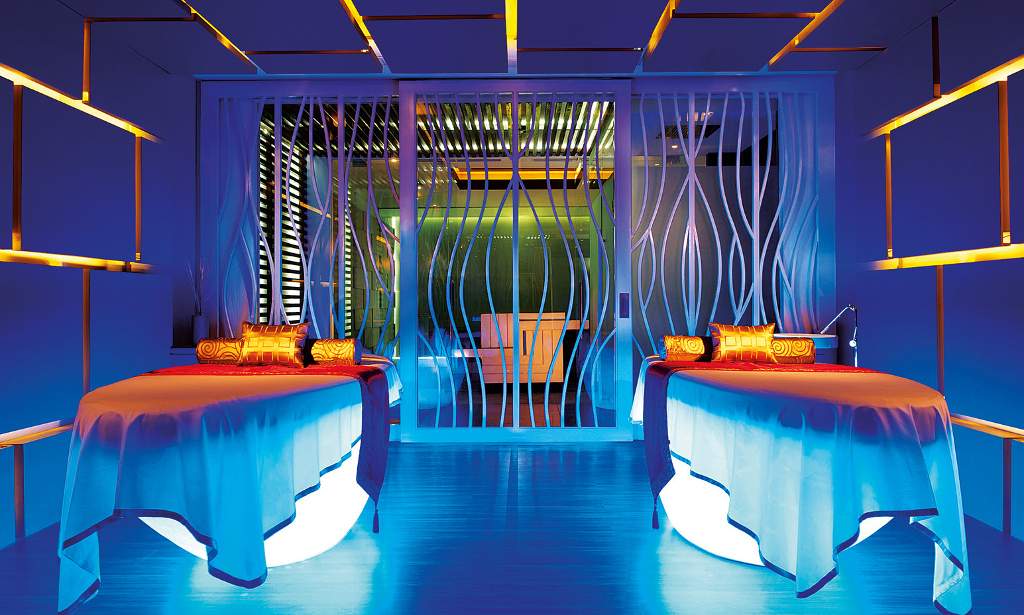
The intent to compare couples spa options is frequently undermined by an industry lexicon that conflates luxury with quality. In practice, a facility that is “luxury” by marketing standards, characterized by marble surfaces and opulent design, may function poorly as a therapeutic space due to high acoustic noise, irregular temperature regulation, or inefficient flow patterns. To truly compare couples spa options, one must prioritize performance metrics over aesthetic ones: specifically, the facility’s capacity for seclusion, its ability to maintain a strictly controlled sensory environment, and the professional credentials of its service delivery team.
Oversimplification in this sector introduces profound logistical risk. Many travelers rely on aggregated review platforms where the ratings reflect the “vibe” of the guest’s experience rather than the structural integrity of the service. A couple seeking a deeply immersive or restorative experience requires a fundamentally different facility configuration than those seeking a social, high-volume engagement. Failure to account for these operational differences is why many high-cost sessions ultimately fall short of their intended outcomes. Effective vetting necessitates an inquiry into the facility’s “quiet-state” protocols: how does the establishment handle staff ingress/egress, acoustic buffering, and the scheduling of concurrent services to ensure the environment remains undisturbed?
When you compare couples spa options, you are essentially vetting a high-consequence service environment. The most resilient selections are those where the operator understands that the environment is an active participant in the therapy. Facilities that treat their physical space as a precision-managed asset where lighting, sound, and air quality are as rigorously maintained as the treatments themselves represent the highest tier of the industry.
Deep Contextual Background: The Evolution of Wellness Architecture
Wellness was historically a localized, often communal affair, defined by its environmental context, natural springs, thermal baths, or traditional clinical settings. The 20th-century hotel spa revolution industrialized this, introducing the “menu-based” model of wellness. In this era, the focus shifted to the number of treatment rooms and the variety of menu items, leading to a “canned” experience that often sacrificed the specific needs of the individual for the sake of organizational scalability. We are now in the third era of wellness, where the “boutique” model emphasizes context, privacy, and architectural cohesion. This evolution reflects a broader societal move toward prioritizing the “therapeutic environment” as a standalone asset, distinct from the brand or property that houses it.
Conceptual Frameworks and Mental Models
-
The Sensory-Flow Model: Treat the spa as a sequence of environmental states. A superior facility manages this sequence, ensuring that transitions between the reception, the prep area, the treatment suite, and the post-treatment space are frictionless and sensory-coherent.
-
The Privacy-Density Ratio: The intimacy of a couple’s experience is inversely proportional to the density of the facility. A facility with a high number of treatment rooms per square foot of public area is structurally biased toward social disruption.
-
The Service-Integrity Threshold: Evaluate the service by the degree of “uninterrupted time.” A session that is repeatedly broken by logistical inquiries, technician turnover, or environmental noise has crossed the service-integrity threshold and is no longer a restorative intervention.
-
The Infrastructure Lifecycle: A spa’s age is not the primary factor; its maintenance culture is. Facilities that prioritize preventive maintenance—regularly calibrating sensory systems and refreshing hardware—are inherently more reliable than those that rely on periodic “facelift” renovations.
Categorizing Operational and Experiential Models
| Model | Primary Characteristic | Best For |
| Integrated Destination Spa | Full-spectrum wellness | Deep immersion/Protocol-led |
| Urban Sanctuary | High-efficiency seclusion | Targeted/Short-term restoration |
| Bespoke Private Estate | Asset-level privacy | Uncompromised exclusivity |
| Standardized Hotel Spa | High utility/Access | Convenience/Baseline maintenance |
When users compare couples spa options, they must weigh the inherent trade-off: destination-based models offer depth and environmental control, while urban models offer efficiency and ease of integration into a larger itinerary.
Detailed Real-World Operational Scenarios
-
The Deep-Restoration Mandate: The goal is maximum physiological recovery. The constraint is the “recovery cycle” (the period following the treatment). Failure mode: the spa is situated in a high-traffic area, meaning the guest is immediately thrust back into a stimulating, loud environment after the session, negating the therapeutic benefits.
-
The Social-Wellness Engagement: The goal is connection rather than clinical restoration. The constraint is the scheduling of concurrent treatments. Failure mode: the facility cannot guarantee simultaneous treatments, leading to disconnected experiences where one guest waits while the other is treated.
-
The High-Velocity Connector: The goal is a seamless wellness experience during a high-paced travel schedule. The constraint is administrative efficiency. Failure mode: the booking system is opaque or manual, leading to scheduling errors that waste valuable time.
Planning, Cost, and Resource Dynamics
| Component | Variability | Strategic Impact |
| Treatment Infrastructure | Low | Foundation of experience |
| Technician Expertise | High | Fidelity of therapy |
| Environment Control | Moderate | Sustenance of rest |
The hidden cost of wellness travel is the “inefficiency tax,” the time and emotional energy spent resolving scheduling gaps, poor facility cleanliness, or ineffective sensory control.
Tactical Strategies and Support Systems
-
Facility Technical Audit: Inquire specifically about the acoustic isolation and temperature-control systems of the couple’s suite before booking.
-
The Concierge Stress-Test: Contact the spa concierge with a complex, non-standard request. Their ability to handle this without friction is a leading indicator of the facility’s internal operational capability.
-
The “Base State” Requirement: Ensure that all transitionary periods (changing, pre-treatment rest) are structurally accounted for in the booking, not left to ad-hoc negotiation upon arrival.
The Risk Landscape: Failure Modes
-
Environmental Encroachment: The risk that high-density communal areas negate any privacy gained in the suite.
-
Protocol Drift: The risk that the service provider’s standard protocol does not align with the couple’s specific needs, leading to an impersonal, “factory” feeling.
-
Infrastructure Failure: The risk that critical sensory-control hardware (HVAC, music systems) fails during the treatment, causing immediate physiological distraction.
Governance, Maintenance, and Long-Term Adaptation
-
Management Tenure: Facilities with low senior-management turnover statistically demonstrate higher service consistency.
-
Preventive Maintenance Records: A facility that discusses the maintenance of its “back-of-house” systems values operational integrity.
-
The Feedback-Adjustment Loop: How does the facility handle constructive feedback? A top-tier operator treats guest feedback as a diagnostic tool for refining their operational protocols.
Measurement, Tracking, and Evaluation
-
Leading Indicators: The specificity of the pre-treatment consultation, the clarity of facility communication, and the promptness of administrative follow-up.
-
Lagging Indicators: The “recovery duration” duration of sustained physiological calm following the treatment, t—, and the consistency of the experience if repeated.
-
Example Documentation: A simple table tracking the “Time-to-Fulfillment” for each amenity requested, providing a quantitative metric for the facility’s service efficiency.
Deconstructing Misconceptions
-
“More square footage equals more luxury”: Often, excessive size reduces intimacy and increases the likelihood of noise and staffing inconsistency.
-
“High-end branding equals high-end therapy”: A prestigious brand label is frequently divorced from the actual technical training of the individual therapists.
-
“Couple-focused means exclusive”: In many high-volume facilities, “couples spa” simply means two tables in one room, without enhanced privacy or specialized protocols.
-
“All treatments are equal”: In wellness, the protocol is the product; a variation in how a therapy is performed can lead to wildly different outcomes.
Ethical and Contextual Considerations
The wellness sector is under increasing scrutiny regarding its use of natural resources, the labor conditions of its staff, and the environmental impact of its treatment materials. A responsible vetting process includes inquiring about the provider’s sourcing of oils, their waste management practices, and their support for employee well-being. Selecting providers that prioritize these metrics is a long-term investment in the sector’s sustainability and contributes to the quality of the service itself. When you compare couples spa options, you are also evaluating the ethics of the institution you are choosing to support.
Conclusion
The search for an optimized wellness experience requires the same level of discipline as any high-value asset acquisition. When you compare couples spa options, you are not simply selecting a treatment menu; you are evaluating a managed sensory environment. The most successful travelers are those who prioritize the facility’s operational integrity, its acoustic control, staff-to-guest density, and management stability over the superficial allure of brochure imagery. By moving toward a systemic evaluation, one can insulate their investment from the logistical friction that characterizes mass-market wellness, ensuring that the experience remains a genuine restorative intervention rather than a commoditized service.