Flight Cancellation Protection Plans: The Definitive Vetting Guide
The modern air travel ecosystem operates on a precarious balance of high-volume logistics and systemic fragility. As scheduling complexities increase, the traveler’s reliance on robust financial safety nets has moved from an optional luxury to an essential operational component. When an itinerary is disrupted, the resulting cascade of costs, including rebooking fees, non-refundable lodging, and lost professional time, can quickly eclipse the ticket’s initial price. Managing these risks requires more than a casual review of airline policies; it demands a sophisticated understanding of how various financial safeguards interact with the legal and operational realities of global aviation.
Effective risk mitigation in air travel is rooted in recognizing that no single solution provides universal coverage. Airlines, credit card issuers, and third-party insurers each provide protection mechanisms that are bound by rigid and often contradictory terms of service. Navigating this landscape without a clear framework for evaluation leaves the traveler exposed to significant financial and temporal uncertainty.
This analysis serves as an exhaustive reference for the professional traveler and the logistical planner, providing a methodology for deconstructing the complexities of travel insurance and airline policies. By focusing on the structural nuances of coverage, rather than promotional marketing, this guide facilitates a more deliberate approach to ensuring stability in an inherently volatile environment.
Understanding “flight cancellation protection plans.”
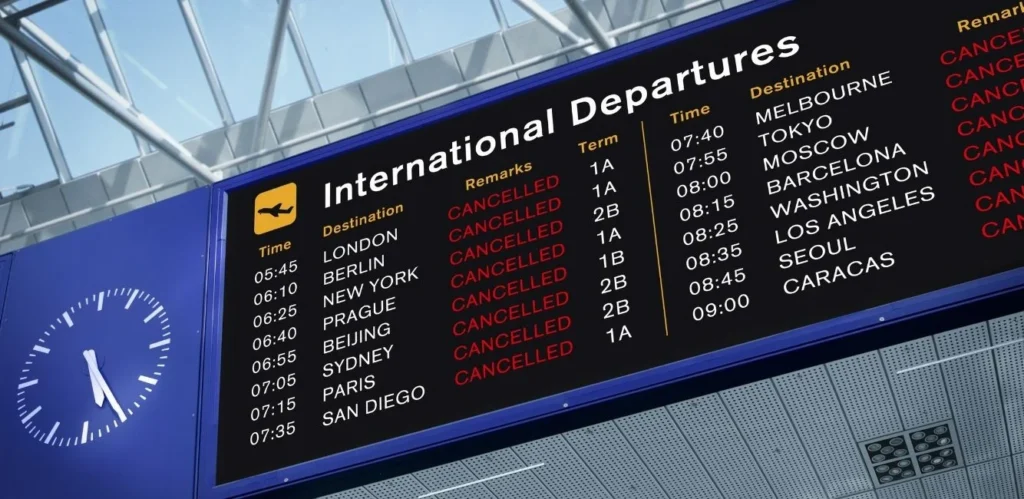
The industry terminology regarding flight cancellation protection plans is often conflated with comprehensive travel insurance, creating a significant misunderstanding of scope. A specific “cancellation protection” product, often marketed by airlines at the point of sale, is typically a limited-liability contract that triggers only under very narrow circumstances such as documented medical emergencies or, occasionally, specific transit disruptions. It is fundamentally different from a comprehensive travel insurance policy, which offers a broader, multi-peril safety net covering everything from baggage loss to emergency evacuation.
Oversimplification in this field introduces profound risk. Travelers who believe they are “fully protected” by an airline-sold waiver often discover, too late, that their policy does not cover events like strikes, widespread weather-related grounding, or changes in professional requirements. Genuine mastery of flight cancellation protection plans requires a granular assessment of what constitutes a “covered peril.” Without this level of detail, the consumer inadvertently accepts the risk of catastrophic financial loss while operating under the false comfort of an insufficient safety buffer.
Deep Contextual Background: The Evolution of Travel Liability
Historically, travel protection was a straightforward affair managed through travel agencies. The rise of direct booking and the deregulation of the aviation industry shifted the burden of risk management entirely onto the passenger. As airlines unbundled their fares to lower the advertised price, the “extras,” including flexibility and cancellation rights,s became premium assets. This evolution has forced a shift where the passenger is now the de facto insurer of their own itinerary, requiring them to synthesize protections from multiple, often conflicting sources: government-mandated compensation, airline-specific policies, credit card ancillary benefits, and private insurance.
Conceptual Frameworks and Mental Models
-
The Coverage-Gap Model: Visualize your total trip cost as a vessel, and your various protection policies as patches. A “coverage gap” exists whenever a peril (e.g., flight delay) falls outside the defined triggers of your specific policy mix.
-
The Trigger-Dependency Metric: Evaluate every protection product based on the “effort of proof.” An airline-specific waiver may be automatic, whereas a private insurance claim requires significant documentation.
-
The Redundancy-Optimization Ratio: Avoid overlapping policies that provide the same coverage (e.g., paying for airline protection when your premium credit card already offers travel cancellation benefits).
-
The Peril-Severity Matrix: Rank potential disruptions by frequency and impact. Prioritize coverage for low-frequency, high-impact events (e.g., medical emergency, trip abandonment) over high-frequency, low-impact events (e.g., minor luggage delay).
Key Categories and Policy Variations
| Policy Category | Trigger Sensitivity | Primary Limitation |
| Airline-Direct Waiver | High (Narrow scope) | Valid only for that specific airline |
| Credit Card Ancillary | Moderate | Requires payment on the specific card |
| Comprehensive Insurance | Low (Broad scope) | Cost-intensive; extensive documentation |
| “Cancel for Any Reason” | None (Absolute) | Significantly higher premiums (up to 50% more) |
The decision logic here is driven by the trip’s financial exposure. If the total sunk cost is low, standard airline policies may suffice. If the trip represents a significant capital outlay, a tiered strategy combining card benefits with primary insurance is the industry standard.
Detailed Real-World Operational Scenarios
-
The Professional Itinerary: Your travel is dictated by business needs. The constraint is extreme scheduling rigidity. Failure mode: missing a high-value meeting due to an airline delay. The strategy must involve “trip interruption” coverage, not just cancellation.
-
The Seasonal Environmental Risk: You are traveling to a region prone to typhoons or winter storms. The constraint is environmental volatility. The decision point is the purchase of a “Cancel for Any Reason” (CFAR) policy to mitigate the risk of a regional grounding.
-
The Multi-Provider Trip: Your travel involves separate tickets on different carriers. The constraint is the lack of inter-airline support. Failure mode: the first carrier is delayed, causing you to miss the second, non-connected carrier. This necessitates “travel delay” insurance that explicitly covers missed connections.
Planning, Cost, and Resource Dynamics
| Resource Type | Investment Priority | Strategic ROI |
| Premium Credit Card | Primary | High base coverage provided |
| Comprehensive Insurance | Secondary | High; covers health/evacuation |
| Airline Waiver | Conditional | Low; only for minor changes |
The opportunity cost of failing to plan is not just financial; it is the loss of the trip itself. A well-planned protection strategy amortizes the cost of insurance against the total value of the trip, usually resulting in a cost-to-coverage ratio of 5–8%.
Tactical Strategies and Support Systems
-
Documentation Ledger: Maintain a digital folder containing every policy, contact number, and receipt. In a crisis, time is the rarest resource; having these items pre-indexed prevents decision paralysis.
-
The 24-Hour Rule: Verify the “cooling-off” period for your policies. Many insurers allow for policy changes within a short window after purchase if your plans shift.
-
Provider Consolidation: Whenever possible, use a single comprehensive insurance provider to avoid the “coordination of benefits” nightmare that occurs when multiple insurers try to shift liability between them.
The Risk Landscape: Taxonomy of Failure
-
The “Pre-Existing” Trap: Many travelers are denied claims because their medical condition predated the purchase of the policy. Always check the look-back period.
-
The Documentation Void: Failure to obtain official proof of a delay (e.g., a “delay letter” from the airline) is the most common reason for claim denial.
-
Policy Incompatibility: Believing that airline compensation (government-mandated) and insurance payouts are additive, rather than potentially mutually exclusive depending on the policy language.
Governance, Maintenance, and Long-Term Adaptation
-
Policy Audit: Review your credit card’s travel benefits every year. Banks frequently change the specifics of what is covered, which can lead to accidental coverage gaps.
-
The “Triggers” Checklist: Before any trip, confirm which triggers (e.g., strike, weather, health) apply to your current set of protections.
-
Review Cycles: Re-evaluate your comprehensive insurance needs whenever your professional risk profile or travel frequency changes.
Measurement, Tracking, and Evaluation
-
Leading Indicators: The speed and clarity of customer service communication from your provider.
-
Quantitative Signal: The claim-to-payout ratio of your chosen insurer (publicly available in many jurisdictions).
-
Documentation Example: Maintain a “Trip Log” documenting every delay or disruption, the cost incurred, and the success or failure of the claim process. This data informs future policy selection.
Deconstructing Misconceptions
-
“Travel insurance covers everything”: Most policies have extensive, explicit exclusions—never assume, always read the fine print.
-
“Airline compensation is guaranteed”: Airline policies vary wildly by jurisdiction; international flight compensation is often distinct from domestic.
-
“Free credit card insurance is enough”: Often, it covers only the transportation cost, not the subsequent loss of hotel nights or tours.
-
“Insurance is for the airline, not me”: Travel insurance is a financial contract for your protection, entirely independent of the carrier’s willingness to assist.
Ethical and Contextual Considerations
The selection of a protection plan should also consider the resilience of the provider. During major crises, certain insurers have been criticized for restrictive interpretations of policy language. Prioritizing reputable insurers with a demonstrated history of transparency is an ethical and practical necessity.
Conclusion
Mastering the complexities of flight cancellation protection plans is an essential competency for the modern traveler. By shifting from a reactive approach, buying insurance as an afterthought, to a systemic approach, you insulate yourself from the inherent instability of global transit. A successful strategy requires a blend of credit card benefits, targeted airline waivers, and, when necessary, comprehensive private insurance. The ultimate goal is not just the recovery of funds, but the preservation of your time and your agency in the face of unforeseen disruptions. Professional travel requires professional-grade protection; by aligning your financial safety net with the actual realities of the industry, you ensure that your mobility remains a source of opportunity rather than a source of potential financial and operational crisis.